Fim Cannabis: Shaping a Plant That Copes With New Zealand Wind
Royal King Seeds
Cultivation team
A fim cut removes roughly three quarters of the newest growth at the very tip of a shoot, leaving the ragged base of the growing point intact — and because you leave part of that tip behind, the plant usually pushes out four or more new tops instead of the two you get from a clean topping cut. For a New Zealand outdoor grower that matters less for the extra colas than for the shape it produces: a shorter, wider, multi-stemmed plant with a lower centre of gravity is far harder for a Wellington southerly or a Canterbury nor'wester to snap or flatten.
That is the short answer. The rest of this is about when a fim is the wrong call, how late in the season you can still make the cut before the plant is committed to flowering, and what to do about wind that no amount of training will fix on its own.
What a fim cut actually removes, and why the result is messier than topping
Look closely at the apex of a healthy vegetative plant. There is a tight cluster of folded new leaves, and buried inside it is the apical meristem — the tissue that keeps extending the main stem upward and suppresses the side branches below it.
Topping cuts the whole shoot off cleanly, above a node. The two shoots at that node take over, and you get two reliable, evenly matched tops. Fimming cuts across the growing cluster itself, taking the top 70 to 80 percent and leaving a stub of partly-divided leaf primordia behind. Those damaged primordia often develop into separate shoots, so a single cut can yield three, four, five or occasionally six tops from one point.
It is also unpredictable. Sometimes the tissue you left is too small to do anything and you have effectively topped the plant slightly high. Sometimes you get four shoots of wildly uneven vigour, and the two strongest turn into the real tops while the others sulk. The name comes from exactly that: an inexact cut that happened to work better than the grower expected. Accept that unevenness as part of the method. If you want two symmetrical, predictable tops for a tidy indoor screen, top instead.
The cut itself
- Sharp, clean snips. Fine-tipped shears, wiped with isopropyl between plants. Crushing the tissue with fingernails works but tears more and heals more slowly.
- Aim for the cluster, not the stem. You want to slice through the folded new leaves, leaving a short fringe of the base behind. If you see a clean hollow stem end, you have topped.
- Cut in the morning on a dry day, so the wound dries rather than sitting damp through a cool night.
- Nothing on the wound. No paste, no sealant. A fim heals faster than you can fuss over it.
- Only on a plant that is growing hard. Deep green, new growth every day, no transplant shock, no nutrient issue in play.
Recovery is usually three to five days before new shoots are obviously pushing, and a week to ten days before the plant looks like it has regained its momentum. Cooler spring weather in the south stretches that out; a warm Northland November shortens it.
Why a low, wide plant survives a nor'wester and a tall one does not
Wind damage outdoors is a leverage problem. A single-stemmed two-metre plant is a long lever with a heavy head on it, and all of the force ends up concentrated at one point — the base of the stem, right where it meets the soil. That is where plants fold, and it is also where repeated rocking opens a split that lets water and rot organisms into the stem.
Fimming attacks that in three ways. It removes apical dominance, so the plant invests in lateral branches rather than vertical extension, and the finished plant is typically shorter. It distributes the canopy mass across several stems, so a gust loads four moderate levers instead of one large one.
And because each of those stems carries real weight and moves independently, each one thickens in response — plants lay down stronger, denser supporting tissue in response to repeated mechanical movement. A fimmed plant grown in a windy site ends up with four stout stems and a trunk that is visibly chunkier than its sheltered equivalent.
The Canterbury nor'wester adds a second problem: it is hot and dry as well as strong. A wide, open plant with several tops transpires hard in that wind, and a plant in a pot will wilt within hours even with moist medium, simply because the roots cannot supply water as fast as the leaves lose it. Shaping for wind only pays off if the root volume and watering keep up.
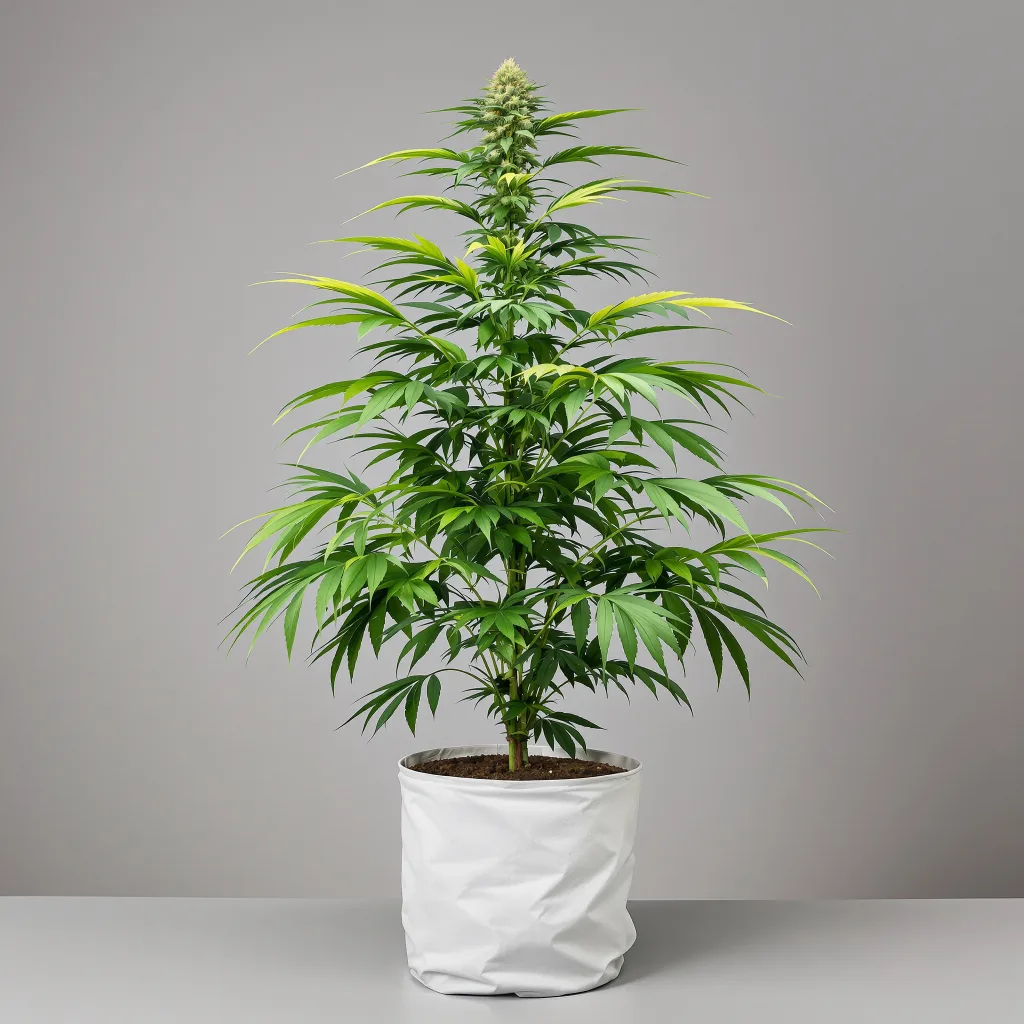
Working back from the solstice: when the last fim has to happen
Photoperiod plants outdoors here start their flowering transition as daylight shortens after the summer solstice on 21 or 22 December, with visible pre-flower usually through January and full flower from late January into February. That gives you the deadline. Every fim needs two to three weeks of hard vegetative growth afterwards to turn into structure rather than just lost time, so the last cut should land in early to mid December at the latest, and for most growers it is sensible to stop sooner.
A workable outdoor sequence for a seedling planted out after the last local frost — usually October, later inland and in the south:
- First fim at four to five true nodes. Typically two to four weeks after planting out, depending on how fast the spring warms. Do not fim a plant that is still sitting in cold soil doing nothing.
- Second fim two to three weeks later, on the two or three strongest of the new tops. This is where the real width comes from. Skip it if the plant has not fully recovered.
- Bend and tie from then on. After the second cut, switch to low-stress training: pull the outer branches down and outward to open the middle and even the canopy height.
- Nothing removed after mid December except the odd lower shoot that will never see light.
Push the window later than that and you take growth out of a plant at exactly the point it needs reserves to stack flowers, and you delay finishing — which, in a country where autumn arrives damp and inland frost starts in April, is the one thing you cannot afford. The month-by-month shape of the season is worth having in front of you when you plan the cuts:
Timings shift with latitude — the north runs earlier and longer than inland Otago and Southland.
Latitude moves all of this. Northland and the Bay of Plenty give a long, warm run-in and plenty of room for two fims. Central Otago, Southland and inland Canterbury compress the whole season at both ends — later planting, earlier frost — and a single fim with heavier bending is usually the better trade there. If finishing date is your binding constraint, start from cultivars selected for outdoor New Zealand conditions rather than trying to train a late finisher into submission.
Fim, top, or neither: choosing by what the wind will do to the plant
Fimming is the better choice when you want maximum width per cut and you are not fussy about symmetry — classic outdoor bush shaping in an exposed site. Topping is better when you want evenly matched tops you can lay into a screen, which is an indoor priority far more than an outdoor one.
Neither is right for an autoflower. Autos run on age, not daylight, and a plant that loses a week of vegetative growth to a healing wound loses that week permanently — there is no way to extend the veg phase to compensate. If you are growing autoflowering varieties in a windy site, shape them by bending the main stem over gently from around the third week and tying it down, and stake them from the start. The same applies to any plant that is already stressed: root-bound, hungry, cold, or recovering from transplant. Training multiplies the vigour a plant already has; it does not create it.
Structure also varies by plant type. Broad-leaved, indica-leaning plants tend to be shorter and stiffer to begin with and respond to a fim by becoming genuinely squat and dense. Tall sativa-leaning plants stretch so hard that one fim barely dents them, and those are the ones that need both cuts plus aggressive bending. When you are weighing two plants with different habits for the same exposed site, it helps to see the height and flowering figures next to each other:
| Industrial Plant Feminised | Blackberry Hashplant Feminised | |
|---|---|---|
| Type | Photoperiod | Photoperiod |
| Lean | Sativa | Indica |
| Listed THC | 18% | 18% |
| Flowering | 45-50 days | 49-60 days |
| Height | Medium | Short |
| Indoor yield | 625 g/m2 | Up to 450g/m² |
| Outdoor yield | 1300 g/plant | Up to 450 gr |
| Difficulty | Easy | Easy |
| Price from | $23.39 | $23.39 |
Training shapes the plant; stakes and shelter stop it breaking
No amount of fimming makes a flowering plant wind-proof. Wet colas on a windy April morning weigh several times what the same branch carried in January, and that is the moment branches tear out at the crotch. Support has to go in before you need it.
- Stake each main top, not just the trunk. Bamboo or steel waratah per stem, driven in before roots fill the bed, with soft tie at two heights.
- Use a ring or cage around a heavily fimmed bush. Four stakes and two circuits of garden twine at 60 cm and 1.2 m holds a splayed plant far better than individual ties.
- Mound the soil at the base and firm it. Wind-rocking that loosens the root plate is as damaging as a snapped branch and much harder to see.
- Filter wind, do not block it. Fifty percent shade cloth or windbreak mesh on the windward side slows a gust. A solid fence creates turbulence and eddies on the lee side that can be worse than the open wind.
- Weight the pots if you are in containers — and accept that a fimmed, wide plant in a 30-litre pot is a sail. Bigger pot, or into the ground.
Tie loosely enough that the stem can still move a few centimetres. Rigidly splinted stems stay thin, because the plant has no mechanical signal telling it to thicken.
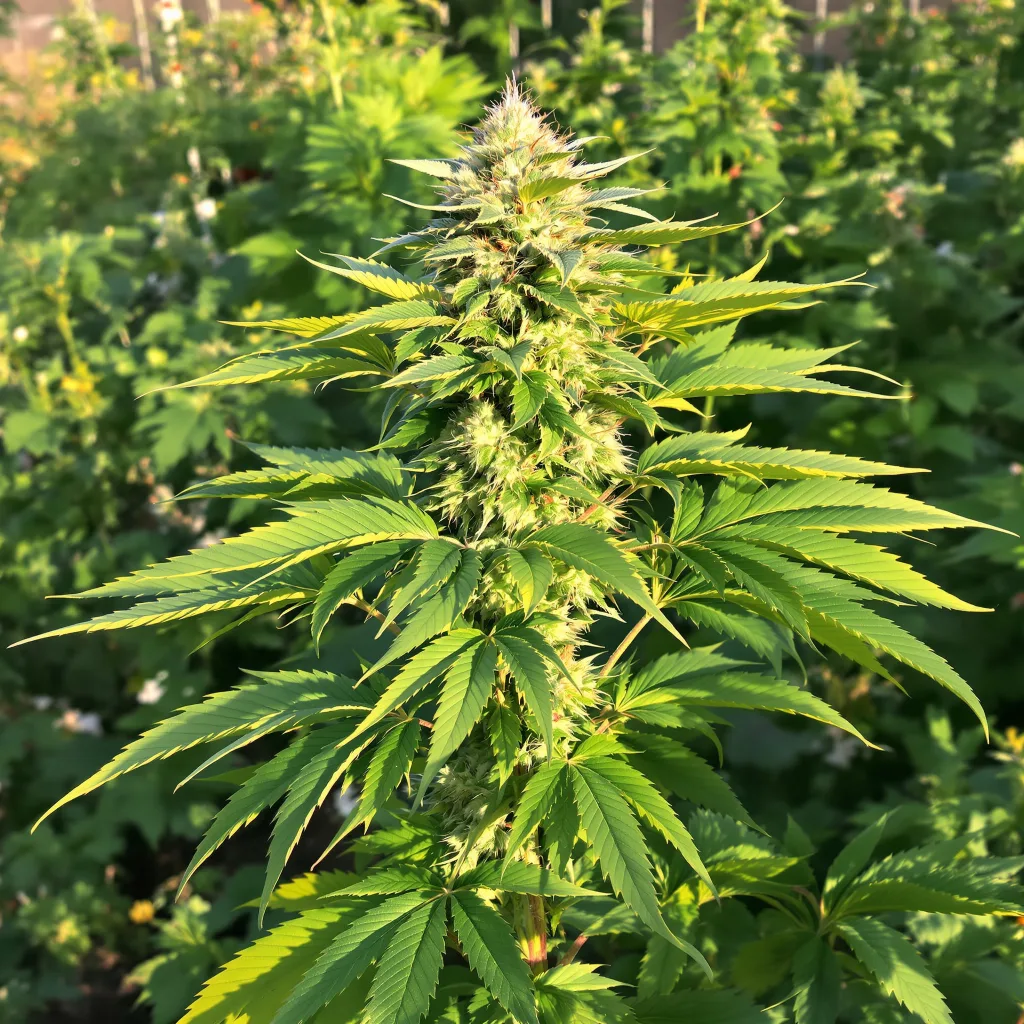
The side effect that matters most here: airflow through the middle of the plant
Botrytis is the defining late-season risk in a New Zealand autumn, and it establishes where moisture sits still. The interior of an untrained plant — one thick central cola surrounded by shaded, crowded growth — is exactly that environment after a wet March night.
A fimmed and spread plant is structurally more open. Four tops held apart by bending dry out faster after rain than one dense mass, and the wind that threatened to break the plant in January is doing you a favour in April. That is the quiet case for training in this climate: the yield gain is real but modest, while the reduction in trapped humidity can be the difference between harvesting a plant and cutting rot out of it.
Do not overcorrect by stripping leaves. Removing the interior fan leaves that shade nothing, and the lower shoots that will never make useful flower, is reasonable. Defoliating a plant bare in an attempt to "improve airflow" costs you photosynthesis right when the plant is building flower, and the plant replaces those leaves anyway. Open the structure with bending and selective removal, then leave it alone. There is more on bud rot and the plant traits that resist it in our growing articles.
Which plants take a fim well, and which fight you
The traits worth looking for in an exposed New Zealand site are short internodes, stiff lateral branches, a reasonably open flower structure, and a finishing time that lands before your local autumn closes in. A plant with those characteristics responds to fimming by becoming a low, strong bush. A lanky stretcher with long internodes will keep reaching for height no matter what you cut.
These three cover the range most growers are choosing between — a broad-leaved feminised plant, a fast auto, and a fruity, dense-flowered hybrid:
Before you commit, check the published structure and finishing figures on the individual pages: the Industrial Plant Feminised genetics report and the Blackberry Hashplant Feminised genetics report both list flowering time, height range and the full cannabinoid and terpene panel, so you are planning against real numbers rather than a general impression. If you are not sure which habit suits your site, the strain finder, filtered by climate and finishing time narrows it quickly.
Flowering time is the figure that constrains everything else about an outdoor plan, and it is worth seeing how it spreads across the feminised range before you settle on a cultivar:
1253 of 1253 varieties in this category publish a flowering time. Counted from the catalogue when this page was built.
Fimming indoors is a different calculation
Under lights, wind is not the problem — light distribution is. A fimmed plant fills the footprint of a tent more evenly than a single-stemmed one, which means fewer watts wasted on floor and walls, and no single top sitting 30 cm closer to the lamp than everything else.
Indoors you have complete control over when flowering starts, so timing is simply a matter of letting the plant recover. Fim, wait until the new tops have two or three nodes of their own growth, then either fim again or flip. Plan for the stretch: most plants add substantial height in the first two to three weeks of twelve-hour days, and a fimmed plant stretches from four or more points at once. If your tent is short, the second fim plus a screen is what keeps the canopy within reach of the light.
Yield expectations should come from the listed figures for the cultivar and your actual space rather than from an assumption that more tops equals more weight — the yield calculator for grams per square metre is the sane way to sanity-check a plan. Feeding matters too: a plant pushing four tops after a cut is hungry for nitrogen through recovery, and the nutrient calculator will get the vegetative ratios in the right territory.

Questions New Zealand growers actually ask about fimming
How do I know if I fimmed it or just topped it badly?
Look at the cut in a few days. If two shoots emerge from the node below, you topped. If three or more shoots push out of the cut point itself, often crowded and slightly deformed-looking, the fim took. Either outcome is fine — the plant is not harmed, you just get a different number of tops.
Can I still fim in January if my plant is small?
No, and a small plant in January is a signal to fix something else. Once daylight is shortening the plant is committing to flower, and removing growth then delays finishing — which pushes harvest deeper into a damp autumn or towards an April frost inland. Bend and tie instead, feed properly, and plan an earlier start next spring.
Will fimming make my plant finish later?
A fim done in the vegetative phase does not change when a photoperiod plant starts flowering — daylight does that. It can delay things indirectly if the plant is still recovering when flowering begins, because stacking will start from a less developed structure. Leave at least two or three weeks of hard growth between your last cut and the solstice.
My site gets the nor'wester badly. Is fimming enough on its own?
It helps considerably, but shelter and staking do the heavy lifting. Fim to lower the plant and spread the load, then add filtering windbreak mesh on the windward side and stake each main stem before flowering weight arrives. Pay attention to watering as well: a dry hot wind can wilt a well-watered plant within a few hours.
Should I fim an autoflower that is growing really strongly?
It is still a gamble, because an auto cannot make up lost days. If the plant is clearly vigorous you can take a single very early fim at around the fourth node, but low-stress training gives most of the same width with no recovery cost. Details for individual varieties, including the published flowering window, are on each plant's page — for example the Industrial Plant Auto genetics report.
Ready to Start Growing?
All 1,677 varieties, posted unbranded and tracked to both islands, each with whatever grow figures we could trace.
Shop Cannabis Seeds