How to Tell if Weed Is Male or Female: What the Label Controls and What It Does Not
Royal King Seeds
Cultivation team
Look at the nodes — where a branch meets the main stem — from roughly the fourth or fifth node upwards. A female shows a small teardrop-shaped pod with one or two fine white hairs pushing out of the tip; a male shows a smooth, rounded ball on a short stalk with no hairs at all. On most photoperiod plants that difference is readable three to six weeks after the seed cracks, well before flowering proper begins, and it is the only tell that is worth anything.
Everything else you have been told — leaf blade count, stem thickness, how vigorous the seedling was, how tight the internodes are, the shape or stripe pattern of the seed — is noise. Growers have been reading those signs for decades and getting them wrong at close to the rate you would expect from guessing. The node is the test. The rest of this is about when to look, what gets mistaken for what, and where a feminised label does and does not remove the question.
Where pre-flowers appear, and why most people look in the wrong place
At every node there are two small pointed spurs called stipules. They sit either side of the branch junction, they are green, thin and slightly curved, and they appear on every plant regardless of sex. Growers mistake them for male sacs constantly. The pre-flower is not the stipule — it forms in the crook between the stipule and the main stem, slightly behind and above the branch.
Lower nodes mature first, but they are also shaded and cramped, so the clearest read is usually three or four nodes down from the top of a plant that has stacked eight or more nodes. Give yourself a 30x jeweller's loupe or a phone macro lens and a cold white torch. In dim light a female pistil looks like a thread of dust and a male sac looks like an unopened leaf tip.
- Start at node four or five and work upward, not downward from the growing tip.
- Look into the crook between the stipule and the stem, not at the stipule itself.
- Use magnification and hard light. Early pre-flowers are a millimetre or two across.
- Check every three or four days once the plant has stacked six nodes, rather than staring at it daily and talking yourself into a verdict.
- Do not call it on one node. Confirm the same structure on two or three nodes before you act.
What a female pre-flower looks like
A narrow teardrop or pear-shaped calyx, wider at the base, tapering to a point, usually sitting tight against the stem on a very short stalk or none at all. Out of the tip come one or two white, translucent hairs — pistils — in a V. The hairs are the confirmation. A calyx without hairs yet is still ambiguous; wait three or four days and check again. On some plants the pistils emerge within hours of the calyx being visible, on others it takes most of a week.
What a male pre-flower looks like
A smooth, symmetrical ball or slightly elongated capsule on a visible stalk, held away from the stem rather than hugging it. No hairs, ever. Within a week or two it is usually joined by others and the cluster takes on the look of a tiny bunch of grapes, often concentrated at branch tips as well as nodes. The ball develops faint vertical seams as it matures — those are the five sepals that will split open and release pollen.
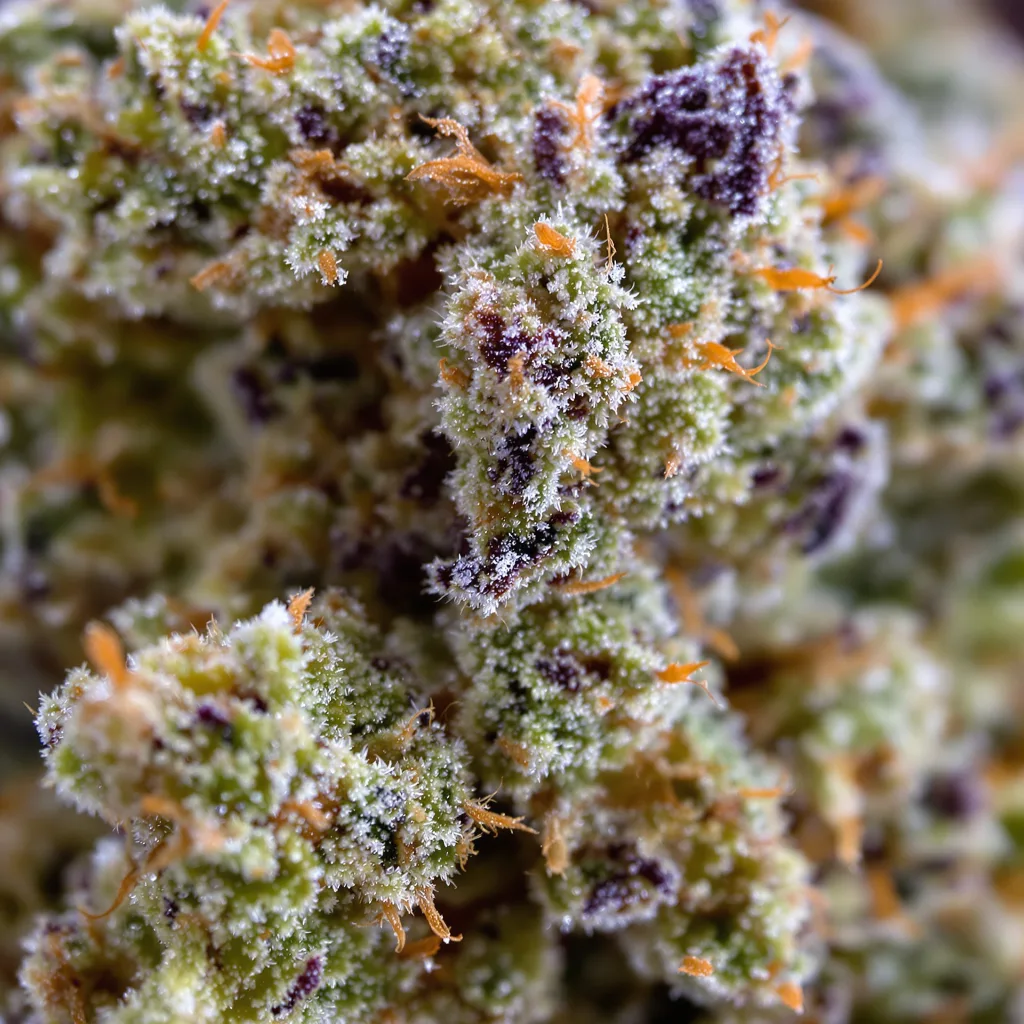
The tells that do not work, and why they persist
The leaf-count myth is the most durable one: that females show more blades or a particular arrangement on the first true leaves. They do not. Blade count tracks plant age and vigour, and a sativa-leaning plant will run more blades than an indica-leaning one of the same sex and age.
The second is stem thickness and height. The idea that males grow taller and lankier has a sliver of truth in landrace populations grown in a field, where males often do stretch earlier, but it is a tendency across hundreds of plants, not a diagnosis of the four in your tent. The third is seed appearance — the dent, the crater, the stripes. Seed morphology reflects how the seed matured and dried, not what is inside it.
The reason these ideas survive is that a grower checks the leaves, forms an opinion, then confirms it weeks later when the pre-flowers show. The memory keeps the hit and discards the misses. If you want an answer a week earlier than the nodes will give you, the honest options are a laboratory leaf test or waiting.
When the pre-flowers show, and how that differs indoors, outdoors and on an autoflower
Sex expression is driven by maturity, not by day length. A photoperiod plant under 18/6 indoors will show pre-flowers at its own pace — typically somewhere in the three-to-six week window from sprouting, earlier on fast, squat genetics and later on stretchy sativa-leaning ones — without you touching the timer. Flipping to 12/12 does not create sex, it just makes the existing pre-flowers develop into full flowers or full pollen sacs within about a week to ten days, which is why people associate the flip with sexing.
Outdoors in New Zealand the two events are weeks apart. Seedlings that go out after the last frost — mid to late October in most of the country, later inland in Canterbury, Otago and Southland — will be showing pre-flowers through late November and December, while the actual onset of flowering waits for day length to fall after the summer solstice. That gap is useful. You get your answer in early summer and the plant does not begin to make buds or pollen until well into January.
Latitude changes the second half of that, not the first. Invercargill's midsummer day is well over an hour longer than Kaitaia's, so photoperiod plants in the deep south hold in vegetative growth later and then flower against an earlier frost. The month-by-month shape of the season is worth having in front of you when you plan the sexing check into it.
Timings shift with latitude — the north runs earlier and longer than inland Otago and Southland.
Autoflowers are the exception that confuses people. Because they flower on age, pre-flowers and real flowers arrive almost together — often in the third or fourth week from sprouting — and you do not get the comfortable gap of a photoperiod plant. If you are growing autoflowering varieties from regular rather than feminised stock, you need to be checking nodes from day eighteen or so, because a male auto can go from first ball to open sac inside a fortnight.
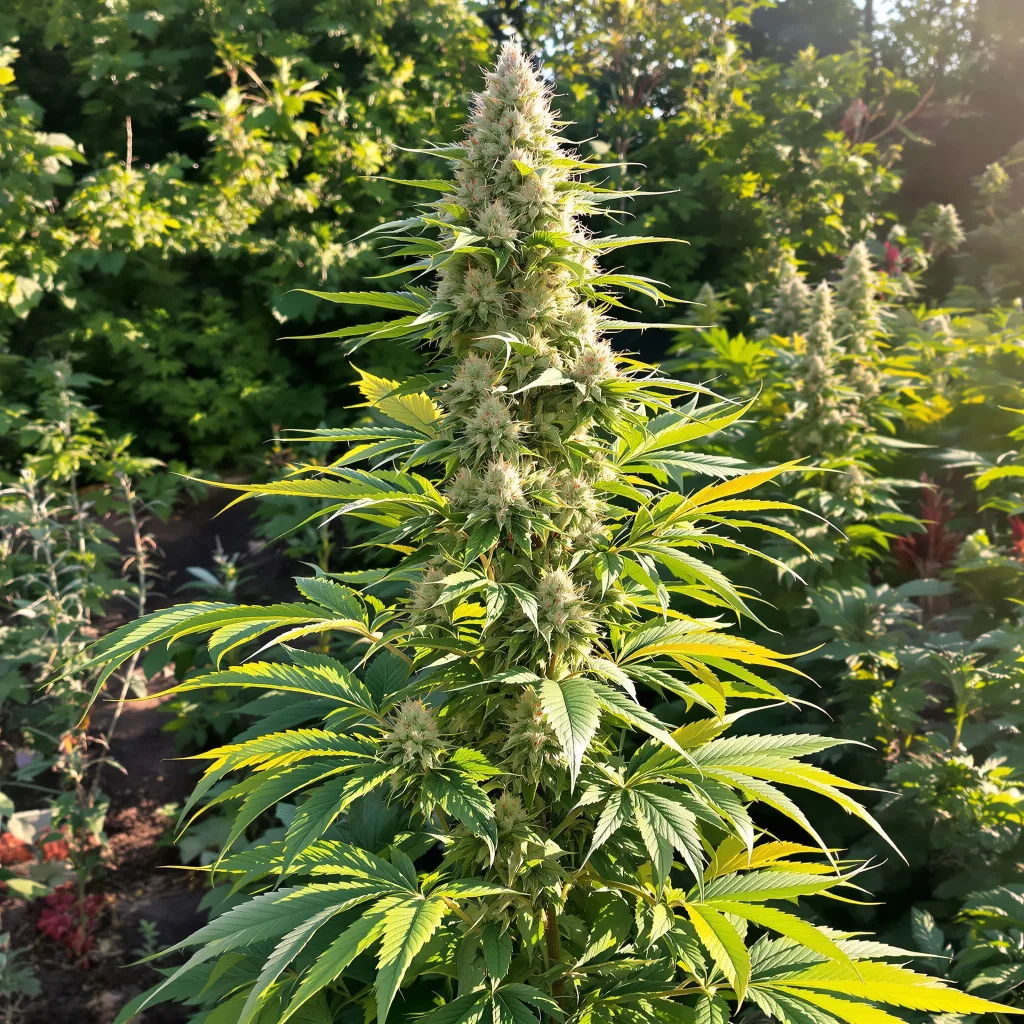
What the feminised label controls, and the one thing it does not
A feminised seed is produced by pollinating a female with pollen from another female that has been chemically induced to form male flowers. There is no male parent, so there is no Y-equivalent contribution, and the seed grows into a plant that expresses pistils rather than pollen sacs. That is what you are buying: the removal of the male-or-female question from your plant count, so eight seeds means eight flowering plants rather than four or five once you have culled.
What it does not control is stress response. Cannabis is a plant that can produce both flower types under pressure, and a feminised plant carries that capacity exactly as any female does. The label does not make a plant intersex-proof. It also does not control phenotype — two seeds from the same packet can differ in height, structure, finishing time and aroma, which is a different variable entirely and the reason people run several and keep the best.
If you have just worked out what a pistil looks like and want to skip the exercise next season, these are varieties where every seed is female from the outset.
The wider feminised seed range is organised the same way. What differs between them is finishing time, structure and reported aroma — all of which sit on the individual genetics pages, such as the Digweed Feminised genetics report, rather than being something to estimate from a photograph.
Intersex plants: what nanners are, and what usually brings them out
A true male is obvious: clusters of stalked sacs at nodes and branch tips, appearing early, on a plant with no pistils anywhere. An intersex plant is a different animal. It flowers as a female, builds buds with pistils, and then at some point produces anthers — pale yellow, banana-shaped, emerging directly from inside the bud with no sac and no stalk. Those are what growers call nanners, and they shed pollen almost immediately.
The common triggers are mechanical and environmental rather than mysterious: light leaks into a tent during the dark period, a timer failure, heat well above the plant's comfortable range for days on end, severe root damage, a plant left to run weeks past ripeness, or a badly broken stem late in flower. Some lineages are more prone than others, and that is a genetics question, but in most home grows the cause is findable in the room.
Checking for nanners is a flowering-stage job, not a seedling-stage one. From about week four of flower, pull a few bud sites apart under a loupe each week, especially around the main stem where light and heat concentrate. A single anther caught and removed with tweezers is usually survivable. A plant producing them throughout the canopy will seed itself and its neighbours, and the decision at that point is whether to isolate it or cut it.
You have found a male — what you do in the next few days
There is less urgency than the internet suggests, and more than beginners assume. From the first clearly male pre-flower, sacs generally take one to two weeks to swell and begin splitting, though it varies with the plant, the temperature and how far into flowering the plant is. Once a sac opens, pollen is already moving. It is extremely fine, it survives on hands, sleeves and tools, and in open air outdoors it travels in kilometres rather than metres — a male two properties away is not isolated by a fence.
- Do not shake it. Handle the plant slowly, especially indoors where an extraction fan will carry anything that comes loose.
- Bag before you cut if sacs look close to opening. A plastic bag over the top, closed at the stem, then cut below it.
- Remove the whole plant, roots and all, rather than trimming off sacs and leaving it in the room. It will make more.
- Change clothes and wash your hands before going back in among females, and wipe down secateurs.
- Check the rest of the garden that same day. Where there is one male there is often a second.
Keeping a male is only worth it if you intend to breed, and that means real isolation — a separate building or a long distance, not the other end of the same room. Pollen collection and selection is a project in its own right, and the plant you keep should be chosen on structure, vigour and the traits of its sisters, not on being the one that happened to be male.
Why sexing early matters more in the south than in the north
The practical value of knowing sex in November is that it tells you how many plants you are actually feeding, watering and giving space to for the rest of the season. Pull the males in early December and the remaining females get the light and root room that would otherwise have gone to plants you were going to destroy anyway — and outdoors, airflow between plants is the single cheapest defence against botrytis when the autumn damp arrives.
That matters most where the finish is tight. In Northland, Auckland and the Bay of Plenty, a plant that runs a fortnight long is usually just a wetter, riskier harvest. In Central Otago or inland Canterbury, a fortnight long is the difference between harvesting and losing the crop to an April frost. Flowering time is the figure that decides it, and it is distributed more widely across varieties than most people expect.
1253 of 1253 varieties in this category publish a flowering time. Counted from the catalogue when this page was built.
If you are choosing between a long-flowering variety and a faster one for a cold or damp site, it helps to see the two sets of numbers next to each other rather than reading two pages a day apart.
| Satellite OG Feminised | Apple Betty Feminised | |
|---|---|---|
| Type | Photoperiod | Photoperiod |
| Lean | Hybrid | Hybrid |
| Listed THC | 22% | 33% |
| Flowering | 55-65 days | 8-9 weeks |
| Height | 90-120 cm. Medium | Up to 130 cm |
| Indoor yield | up to 350 g/m2 | 450 g/m2 |
| Outdoor yield | up to 400 g/plant | 550 g/plant |
| Difficulty | Beginner To Intermediate | Easy |
| Price from | $23.39 | $25.19 |
For a shortlist built around your own location and season length, the strain finder filters on finishing time directly, and the varieties selected for outdoor growing are the sensible starting pool for a first season outside.
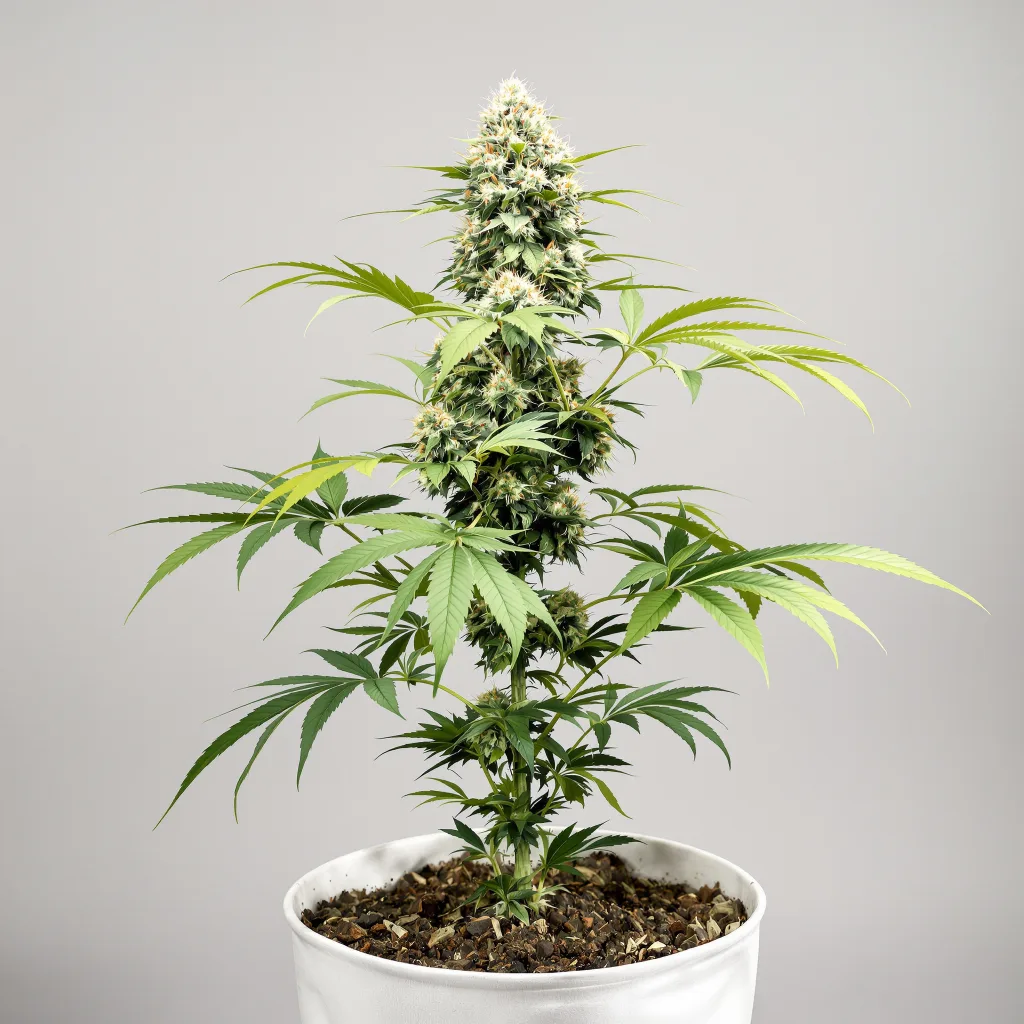
Questions New Zealand growers actually ask about sexing
How early can I tell if my plant is male or female?
Realistically, three to six weeks from sprouting for photoperiod plants, once six or more nodes have stacked and pre-flowers form in the crook of the node. Faster, squatter genetics tend to show at the early end and stretchy sativa-leaning plants at the late end. There is no reliable way to read it from the seedling leaves, no matter how many node-by-node photo guides suggest otherwise.
My plant has white hairs and also some little balls — what is it?
Check whether the balls are on stalks in clusters or are single banana-shaped anthers pushing out from inside a bud. Clusters of stalked sacs alongside pistils point to a genuinely intersex plant; loose anthers in the buds are usually a stress response and the first thing to do is hunt for a light leak, a timer fault or a heat spike. Either way it can pollinate your other plants, so deal with it the same week you find it.
Can a feminised seed turn out male?
A fully male plant from feminised seed is very rare, because there is no male parent in the cross. What does happen is intersex expression under stress, which people then describe as the seed having turned male. The frequently asked questions page covers what we do and do not guarantee on a packet, and the growing conditions that sit on your side of that line.
Do I need to check autoflowers too?
If they are feminised, no, beyond the normal flowering-stage check for stray anthers. If they are not, start looking at day eighteen or so, because an auto compresses pre-flower and flowering into the same fortnight and a male will open sacs much faster than a photoperiod plant would.
Will one male plant down the road ruin my grow?
Possibly, depending on wind and distance — cannabis pollen is wind-dispersed and moves well beyond a single section. You will not know until you break open buds at harvest and find seeds. Growing in an enclosed space is the only real control; outdoors, the best you can do is remove your own males promptly and accept that the neighbourhood is not under your management.
Once the males are out and you know what you are actually growing, the rest of the season is structure, feeding and finishing on time. Full listings sit under all cannabis seeds, and the Digweed Feminised page is a reasonable example of the detail to compare before you commit a season to a variety.
Related Articles
Ready to Start Growing?
All 1,677 varieties, posted unbranded and tracked to both islands, each with whatever grow figures we could trace.
Shop Cannabis Seeds