Cloning Weed: What It Involves, and Why We Do Not Sell Clones
Royal King Seeds
Cultivation team
Cloning weed means cutting a living branch off a plant you already have, rooting it, and growing it on as a genetically identical copy — and it is one of the easier pieces of horticulture you will ever do, once you have a plant worth copying. We do not sell clones because a rooted cutting is a living plant that needs light, water and air every day it is in transit, and because it carries every pest, spore and latent infection its mother had, straight into your room.
A seed does neither. It sits dormant in a packet, arrives in whatever condition the packet arrived in, and starts its life in your medium rather than someone else's.
That is the answer. The rest of this is worth your time if you want to know how cuttings are actually taken, what keeping a mother plant through a New Zealand winter really costs you in space and power, and the one argument that matters most here: an identical row of clones is the worst possible shape for a damp Southern Hemisphere autumn.
What taking a cutting actually involves
The mechanics are simple enough that the first attempt usually works. You are removing a shoot from a plant in vegetative growth and asking it to grow roots before it runs out of stored water, so everything you do is either about reducing water loss or about encouraging root initiation.
- Pick the donor while it is vegetative. A plant in healthy growth, watered the day before, not pushed hard on nitrogen. Soft, over-fed growth roots poorly.
- Sterilise the blade. A scalpel or a razor, wiped with isopropyl between plants. Secateurs crush the stem.
- Take a shoot with two or three nodes — roughly 8 to 12 cm — from the lower or middle part of the plant. Cut on an angle just below a node.
- Strip the lowest leaves and shorten the remaining fan leaves by about a third. Less leaf area means less transpiration while there are no roots to replace the water.
- Dip into rooting gel or powder and set the cutting into a pre-soaked rooting plug, rockwool cube, or a light perlite-heavy mix. Water alone works too, just more slowly.
- Into a propagator with the vents shut for the first day or two, somewhere around 22–25 °C, under weak light on a long day cycle. Bright light at this stage does nothing useful and costs the cutting water.
- Open the vents progressively over the following days. Mist the dome, not the leaves, once things have settled — standing water on cut leaf edges invites rot.
- Pot up when roots show at the plug edges. How long that takes varies with cultivar, stem thickness and root-zone temperature; a cool garage in July will easily double the time a warm propagator in November needs.
Cuttings from a plant that has already started flowering will root, but they take longer and have to revert to vegetative growth first, which produces the twisted, many-headed regrowth some people chase deliberately. For an ordinary run of clones it is a nuisance rather than a technique.
The mother plant is the part nobody warns you about
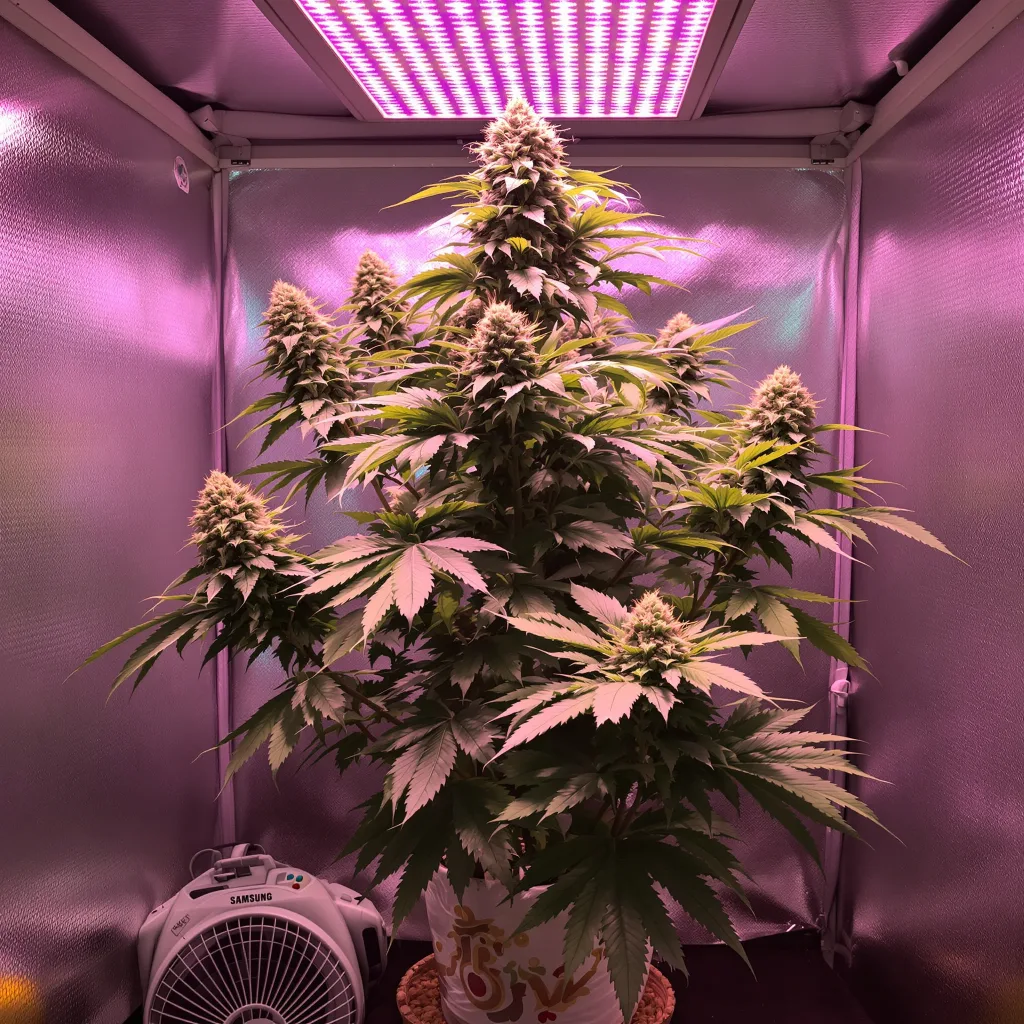
A cutting is cheap. The plant it comes from is not, because it has to stay alive and in vegetative growth for as long as you want copies — and that means a permanent, lit, heated, ventilated space that produces no harvest at all.
A mother kept for a year or two becomes woody at the base, needs repotting, needs its own feed regime, and gradually gets less generous with usable shoots. She has to be kept on a long day cycle continuously, so she cannot share a tent with anything in flower. If you are running one tent, keeping a mother means either a second small space or giving up part of your only flowering area to a plant that will never be cut down.
Winter is the hard part, and it is harder the further south you are
Our coldest months are June, July and August, exactly when a mother and any young cuttings are most vulnerable. In Northland, Auckland and the Bay of Plenty the issue is not cold, it is winter damp — still, saturated air in an unheated room, and powdery mildew moving through a mother plant that has nowhere to dry out. Extraction and air movement matter more in winter than most people expect.
Through inland Canterbury, Otago and Southland the problem reverses. An uninsulated garage or shed can sit in single digits for weeks, and propagation effectively stops below about 18 °C at the root zone. A heat mat under the propagator and a thermostatically controlled heater are not optional extras there; they are the reason the cuttings root at all.
Seed has none of this overhead. A packet in a sealed jar in the fridge costs nothing to keep, occupies no floor space, and does not need to be watered in August.
Why a rooted cutting cannot be posted, and what turns up if you try
Seeds are dormant. That is the whole reason a seed business can exist: the product is stable, it tolerates a courier bag, and it does not care whether it spends two days or five in transit. A cutting is a wound on a living plant with no root system and no water reserve. Every hour in a dark, sealed bag is an hour of stress, and the standard outcomes are wilt, collapse, or stem rot where condensation pooled around the cut.
Even when a cutting survives the trip, it arrives having spent days in the dark and needs a week of recovery before it does anything. You have paid for a living plant and received a convalescent one. And because there is no way to verify what you have been sent until it grows out, the first thing you learn about a mystery cutting is often the thing you least wanted to know.
We ship seed and only seed, on the terms set out on our shipping and delivery information. That is not a limitation we would rather not have. It is the reason a Royal King Seeds order behaves the same whether it is going to Kaitaia or Invercargill.
A clone inherits everything, including what you cannot see
This is the argument that should carry the most weight, and it is the one least often made. A cutting is not a fresh start. It is a continuation of one particular plant's body, and it brings that plant's biology with it.
- Pests travel on cuttings. Spider mite eggs, thrips, aphids and broad or russet mites are all small enough to arrive unnoticed on a leaf underside or in a growing tip. A single introduced cutting is the most common way a clean indoor room becomes a contaminated one.
- Fungal spores travel too. Powdery mildew is frequently latent in the tissue before it is visible on the leaf, and botrytis inoculum will happily ride along on plant debris in a plug.
- Viroids and systemic infections travel invisibly. Diseases that spread through cutting-propagated cannabis stock internationally are transmitted in plant tissue and on unsterilised blades, and a mother can carry one while looking acceptable. The symptoms — stunted growth, reduced vigour, loss of the thing that made the plant worth keeping — show up in flower, months after you would have wanted to know.
- Nothing about the packet's paperwork applies. With seed, you can read the published germination rate, cannabinoid range and terpene panel on the cultivar's own genetics report, as with the Digweed Feminised genetics report. A cutting from an unverified source comes with a name and nothing else.
If you do decide to bring a cutting in from outside your own room, quarantine it well away from everything else for at least three weeks, treat it preventatively, and inspect the growing tips with a loupe rather than your eyes. Most people skip this and regret it.
Identical plants are exactly the wrong shape for a New Zealand autumn
Here is the part that is specific to growing at 34° to 47° south. Our season ends wet. Seedlings go out after the last frost around October, flowering runs into March and April, and the risk that decides whether you harvest anything worth keeping is botrytis — bud rot working outward from the inside of a dense cola after a week of humid, still autumn weather.
A row of clones is a monoculture with a single susceptibility. If the mother makes tight, heavy, slow-finishing buds, every plant in that row makes tight, heavy, slow-finishing buds, and one bad fortnight in April takes all of them together. There is no plant in the row that happens to have looser structure, no plant that happens to be two weeks quicker, because there is no variation at all.
A pack of seeds gives you the opposite. Half a dozen siblings will differ in internode spacing, bud density, leaf-to-calyx ratio and finishing date, and in an outdoor grow that spread is insurance. You keep the one that shrugged off the damp and finished early, and you now have something genuinely worth cloning — a plant you selected under your own conditions, not someone else's.
Flowering time is the figure that decides this more than any other, and it is worth seeing how it distributes before you commit to a cultivar for an outdoor run.
1254 of 1254 varieties in this category publish a flowering time. Counted from the catalogue when this page was built.
Working that back against the calendar is the whole game outdoors, particularly anywhere frost arrives from April.
Timings shift with latitude — the north runs earlier and longer than inland Otago and Southland.
When cloning is genuinely the right tool
None of the above is an argument against cloning. It is an argument against clones as a starting point. Once you have grown a pack out and found the plant you want, taking cuttings is the only way to keep exactly that plant, and there are three situations where it clearly wins.
Preserving a phenotype you selected yourself
You found the sibling that finished before the Marlborough autumn turned, with open enough structure to dry fast and the flavour you were after. Seed from that plant will not reproduce it; a cutting will. This is the single best reason to learn propagation.
Getting an even canopy indoors
Identical plants flower on the same schedule, stretch the same amount and finish on the same day, which makes screen work, defoliation and harvest far simpler. Under lights, where you control humidity and there is no April, uniformity is an advantage rather than a liability. If you want to know how much a tent of matched plants should actually return, the grams per square metre yield calculator is a more honest starting point than a forum figure.
Carrying a plant across the winter
Cuttings taken from an outdoor plant in March, before it is cut down, can be overwintered small under weak light on a long day and planted out again in October. It is the cheapest way to run the same genetics two seasons in a row — and the reason so many people buy one pack, select hard, and then never buy that cultivar again.
How to choose the seed you will eventually clone from
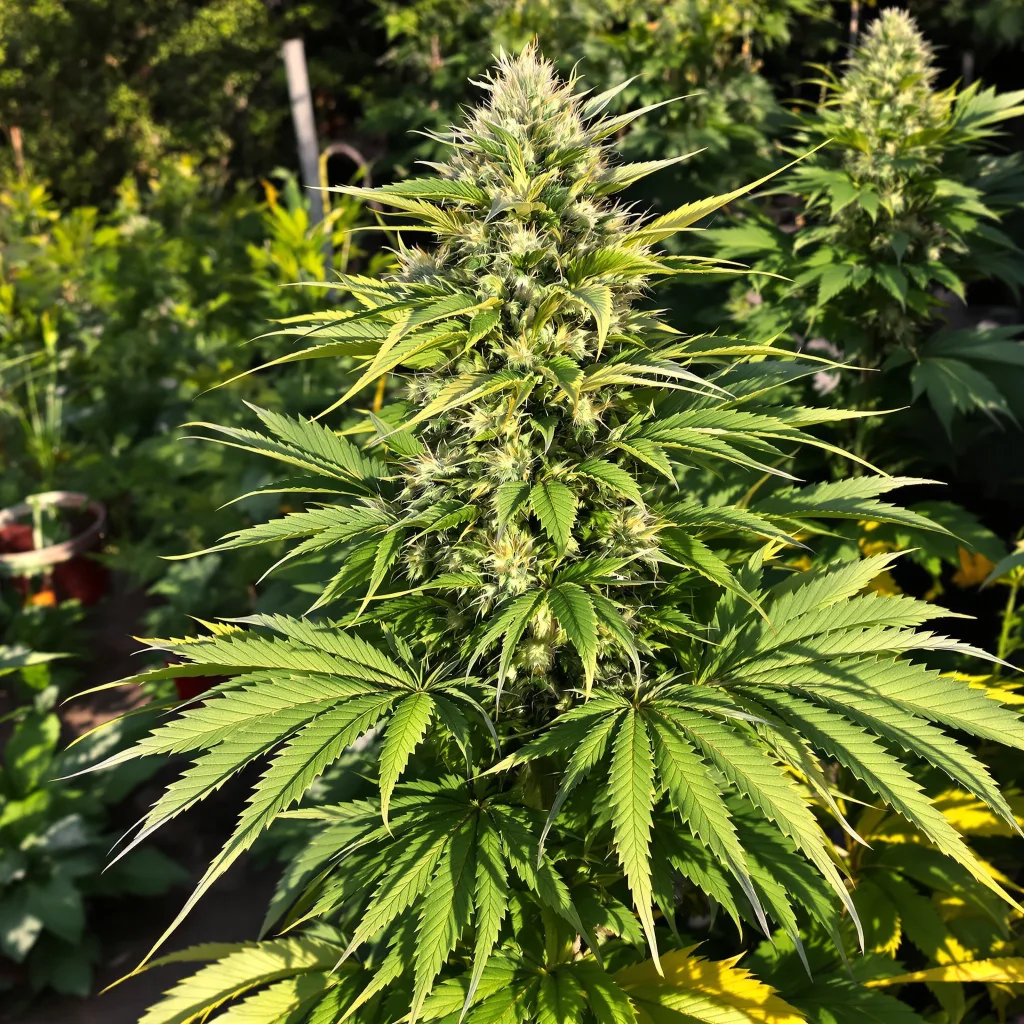
If the plan is to select a keeper and propagate it, the pack you start with matters more than it would for a one-off grow. You want a cultivar with enough vigour to give you usable cuttings, a finishing window that suits your latitude, and a structure that will not fight you in a damp autumn. Feminised seed makes the arithmetic simpler here, because every plant is a candidate rather than a coin toss.
Three cultivars that behave well as donors, for different reasons — one quick and unfussy, one heavy and resinous, one that holds colour — are worth looking at side by side.
Where the choice is between a fast finish and a heavier, slower plant, the trade-off is easier to see with the numbers next to each other.
| M-39 Feminised | Chemo Feminised | |
|---|---|---|
| Type | Photoperiod | Photoperiod |
| Lean | Hybrid | Indica |
| Listed THC | 16% | 22% |
| Flowering | 39-43 days | 49-56 days |
| Height | Short | 90-120 cm. Medium |
| Indoor yield | 350-450 gr | 800 gr/m² |
| Outdoor yield | 500 gr | 650 grams |
| Difficulty | Easy | Beginner To Intermediate |
| Price from | $25.19 | $27.89 |
For a broader shortlist, the cultivars selected for outdoor growing are the ones worth starting from if the end goal is a mother you keep across seasons, and the strain finder will narrow by finishing time, which is the constraint that bites first inland. The full range of feminised seed is the practical place to begin for anyone planning to select and propagate.
Questions people actually ask about cloning
Do clones from a feminised plant come out female?
Yes. A cutting is the same plant, so a cutting from a female is female, and there is no sexing stage to wait through. That is one of the real advantages of propagation over seed — but it only applies to cuttings you take yourself from a plant you have already grown and sexed.
Can I keep cloning from clones, or does it degrade?
You can take cuttings from cuttings more or less indefinitely, and the genetics themselves do not wear out. What does accumulate is damage: latent infections, viroids, mites carried between generations, and gradual loss of vigour in stock that has never been reset. Going back to seed every few years is the simplest way to clear that.
How long should I expect a cutting to take to root?
It varies enough that a single number is misleading — cultivar, stem thickness and especially root-zone temperature all change it. Warm and humid, with a heat mat, is fast; an unheated Southland shed in July may take twice as long or stall entirely. Judge by roots at the plug edge, not by the calendar.
Will you ever sell cuttings or rooted plants in New Zealand?
No. We sell seed because seed survives transit, arrives free of the donor plant's pests and pathogens, and lets us publish a verified genetics report against every cultivar we list. Our answers to common ordering questions cover what is and is not included in an order.
For an outdoor grow, am I better off cloning or starting from seed?
Start from seed, at least the first season. The phenotype variation in a pack is what lets you find the plant that finishes early and resists rot in your particular corner of the country, and that plant is the one worth cloning next year. Copying someone else's selection skips the only step that adapts the grow to where you are.
Ready to Start Growing?
All 1,677 varieties, posted unbranded and tracked to both islands, each with whatever grow figures we could trace.
Shop Cannabis Seeds