NZ Girl Scout Cookies: A New Zealand Grower's Guide
Royal King Seeds
Cultivation team
Girl Scout Cookies genetics grow beautifully in New Zealand, but the honest answer is that they belong indoors, in a greenhouse, or in the drier eastern and northern districts — the dense, resin-loaded flower that made the cookies family famous is exactly the bud structure that botrytis looks for in a damp Kiwi autumn. If you are growing outdoors south of about Nelson, or anywhere the sea fog rolls in through April, the decision that matters is not which cookies cross tastes best but which one is off the plant before the wet sets in.
That is the short version. The rest of this is about when it is different, what the cookies lineage actually does under New Zealand conditions, and how to pick between the crosses rather than chasing a name.
What you are actually buying when you buy cookies seed
The original Girl Scout Cookies came out of California as a clone-only selection — a cross of OG Kush and Durban Poison, with the Thin Mint and Forum phenotypes becoming the cuts everybody chased. Clone-only means exactly that. There is no seed line that reproduces the original plant, here or anywhere, because the plant was never a seed line to begin with.
What breeders have done instead is cross a cookies parent into something else and select for the traits people actually wanted: the sweet, doughy, slightly minty sharpness on the nose, the heavy trichome coverage, the short, knuckly flower clusters, and the purple that shows up in cool nights. So a modern cookies-lineage seed is a hybrid carrying cookies on one side.
That is a good thing for a New Zealand grower, because the traits most worth breeding away from in the original — long flowering, a stacked bud that holds water, and a plant that sulks at high feed rates — are the ones that cause trouble here.
When you are comparing cookies crosses, ignore the marketing copy and read the lineage and the finishing window. Flowering time, listed cannabinoid content and the terpene panel for each cultivar are published on its own genetics report — for example the Chem Scout Feminised genetics report — and those pages are the figures to plan around rather than anything a forum post tells you about "GSC".
Dense cookies flower is a botrytis magnet in a New Zealand autumn
Northern Hemisphere growing guides talk about cookies plants in terms of heat and light intensity. Here the limiting factor is water in the air. March and April in most of the North Island bring warm days, cold nights, heavy dew and long periods where a cola never fully dries out between sunrise and sunset.
Cookies bud structure — tight internodes, flowers stacked into hard knuckles with very little airflow through the middle — holds that moisture against the stem. Grey mould starts internally, on the stem inside a cola, and by the time you see a brown leaf poking out of the side you have usually lost the whole flower.
The things that actually reduce the risk are structural, and most of them have to be done before flowering starts:
- Open the plant up. Take the inner growth out during late veg so every bud site sits on the outside of the canopy where wind can reach it.
- Grow wide, not tall. A topped, spread plant with twenty medium colas dries faster after rain than one with four fat ones.
- Get it off the ground. Pots on blocks, or a raised bed, so the cold damp layer sitting at ground level at 7am is not sitting in your lower buds.
- Pick the earlier finisher. Two weeks earlier in April is worth more than any amount of spraying.
- Inspect weekly from the start of bud fill, and then every second day once the flowers are solid. Cut out any affected cola with 10cm of clean stem either side and get it away from the plant.
A simple clear-roof shelter over the plants, open at both ends, changes the maths completely. It is not about warmth — it is about keeping rain off the flower so the only moisture you are managing is humidity. In Northland, Auckland and the Bay of Plenty that shelter is close to mandatory for a cookies plant. On the West Coast, where the rainfall total makes the rest of the country look arid, do not attempt a dense-flowered cultivar in the open at all.
Where cookies genetics finish outdoors, and where they do not
Working from north to south, the picture is roughly this. Northland, Auckland and the Bay of Plenty give you plenty of season — a cookies cross will finish there with room to spare — but the humidity through autumn is the problem, so the gain in time has to be spent on structure and shelter. Gisborne, Hawke's Bay, Nelson and Marlborough are the sweet spot: warm, bright, and dry enough through the back half of the season that a dense bud can actually ride out the finish. Wellington has the season but the wind, so stake heavily and expect the plant to stay shorter than it would elsewhere.
Inland Canterbury, Otago and Southland are where the decision gets real. Frost can arrive in April, and a long-flowering cookies hybrid planted out in October is still filling when it comes. If you are south of the Waitaki, you want either a greenhouse, or an autoflower started early enough to finish in February, or a cultivar from the range selected for outdoor growing with a genuinely short flowering window. Counting backwards from your own first frost date, not from a generic calendar, is the only planning method that works in this country.
The month-by-month shape of the Southern Hemisphere season is worth having in front of you while you decide when to put seedlings out and when the finish needs to land.
Timings shift with latitude — the north runs earlier and longer than inland Otago and Southland.
One thing worth saying plainly: the single most common mistake with cookies outdoors here is putting a long-flowering plant in the ground in October and assuming a sunny February means a sunny April. It does not. The season does not end with heat, it ends with wet.
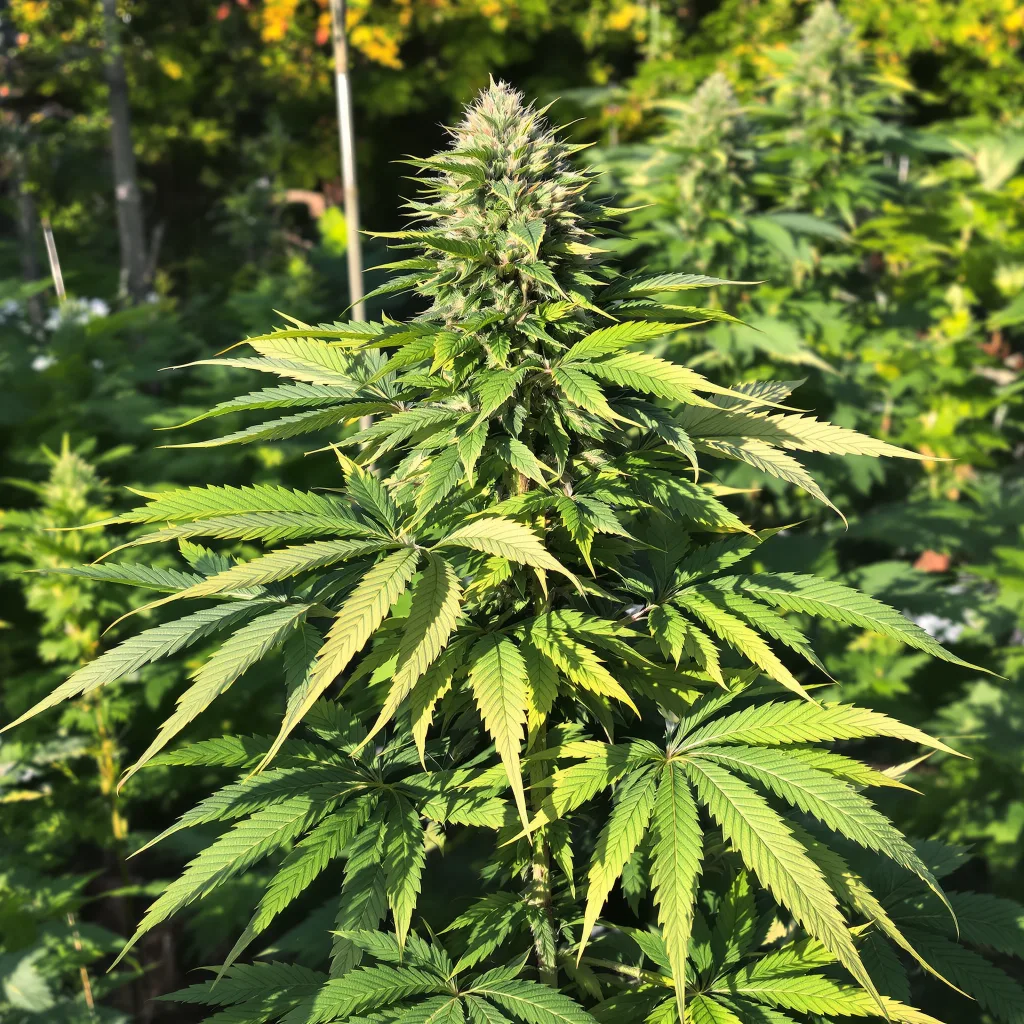
Four cookies-lineage options, and the job each one does
The cookies family in our catalogue splits into clearly different jobs rather than four versions of the same thing, so choose by what your site and your season can support.
Chem Scout Feminised
A cookies parent crossed into the Chem line, which brings a sharper, fuel-edged nose over the sweet dough. It is the most conventional "cookies" grow of the four: photoperiod, responsive to training, and happiest with a controlled finish. Best under lights or in a greenhouse. Full flowering and cannabinoid figures are on the Chem Scout Feminised listing.
Tropicana Cookies Purple Feminised
Cookies crossed toward citrus, with strong colour expression in cool nights — which New Zealand autumns supply for free. If you want the purple, you will get it most reliably in a region with a real temperature swing between day and night: Hawke's Bay, Central Otago under glass, inland Canterbury. The terpene detail is on the Tropicana Cookies Purple genetics report.
Fortune Cookies Feminised
The sweeter, more dessert-leaning end of the family. Worth a look if what you liked about cookies was the flavour rather than the structure — see the Fortune Cookies Feminised page for its specifics.
Berner's Cookies Auto
The hedge. An autoflower runs on age rather than daylight, which means you can plant in November and harvest in February, entirely sidestepping the April mould window. It gives up some size for that. For a Southland or West Coast grower it is often the only cookies plant that makes sense outdoors.
If you are deciding between the two photoperiod options for a greenhouse run, it helps to see height, yield and flowering side by side rather than reading two pages separately.
| Chem Scout Feminised | Tropicana Cookies Purple Feminised | |
|---|---|---|
| Type | Photoperiod | Photoperiod |
| Lean | Indica | Indica |
| Listed THC | 23% | 15% |
| Flowering | 49-63 days | 55-65 days |
| Height | Short | 100-150 cm |
| Indoor yield | 395 g/plant | 550 g/m2 |
| Outdoor yield | Up to 450 gr | up to 600 g/plant |
| Difficulty | Easy | Moderate |
| Price from | $20.69 | $25.19 |
Indoors is where cookies is genuinely at its best
Everything that makes cookies difficult outdoors in New Zealand stops mattering in a tent. You control humidity, you control airflow, and the dense flower becomes an asset rather than a liability. A cookies plant under good light produces an unusual amount of trichome coverage for its size, and the flavour holds up through a proper cure in a way that thinner, faster commercial hybrids often do not.
Practical points for a cookies run under lights:
- Keep late-flower humidity down. Target the low 40s percent through the last three weeks. In an Auckland summer with a tent in an unventilated room, that means a dehumidifier, not just an extraction fan.
- Move air through the canopy, not over it. An oscillating fan aimed into the middle of the plant does more for mould prevention than a bigger exhaust.
- Expect a modest stretch. Cookies crosses generally do not double in flower the way a sativa-dominant plant does, so flip earlier than you would otherwise and let the plant fill the space in bud.
- Light intensity shows up in resin. This is a lineage that rewards getting the light right more than it rewards extra feed.
If you are shopping specifically for tent performance, the cultivars selected for indoor growing are grouped together, and the flowering-time spread across the feminised range is worth a glance before you commit a tent to a long runner.
1254 of 1254 varieties in this category publish a flowering time. Counted from the catalogue when this page was built.
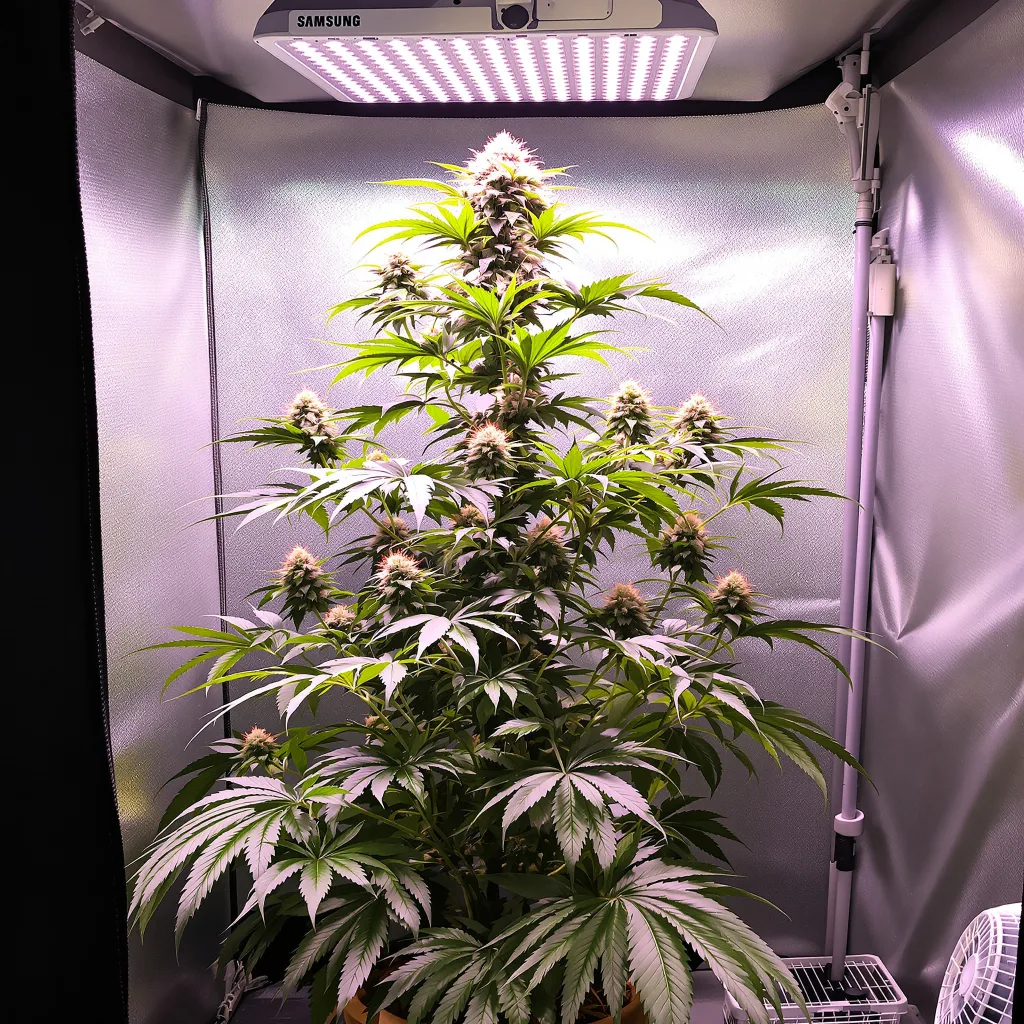
Training and feeding: wide canopy, light hand
Shape it early, because it will not stretch its way out of a mistake
Cookies plants tend toward a bushy, side-branching habit with short internodes. Top once at around the fifth node, then use low-stress training to pull the branches outward and hold them there. The aim is an even canopy where no cola sits in the shade of another — partly for light, mostly for airflow. A screen works well with this lineage because the plant naturally fills horizontally rather than racing for height.
Defoliation is more useful on cookies than on most things. Those short internodes mean leaves sit directly on top of developing bud sites and stay there. Strip the leaves that are shading flower, a handful at a time, in the week before you flip and again around the stretch finishing. Do not strip the plant bare — you are opening sightlines, not harvesting leaves.
Feed conservatively and watch for calcium
The cookies family has a reputation for burning at nitrogen levels that other hybrids shrug off, and for showing calcium and magnesium shortfalls as rusty speckling on mid-canopy leaves — particularly in coco or under strong light. Run your feed lower than you think you need to in early flower and let the leaf tell you whether to push. Tip burn on a cookies plant is not a badge of a well-fed grow; it is the plant telling you to back off. Work out your starting strengths with the nutrient dose calculator rather than guessing, and adjust from there based on what the leaves do over the following week.
Purple colour, when it appears, is mostly a response to cool nights interacting with the plant's genetics. It looks spectacular and tells you nothing about potency. Do not chase it by deliberately chilling a tent in late flower — you lose more in bud development than you gain in photographs.
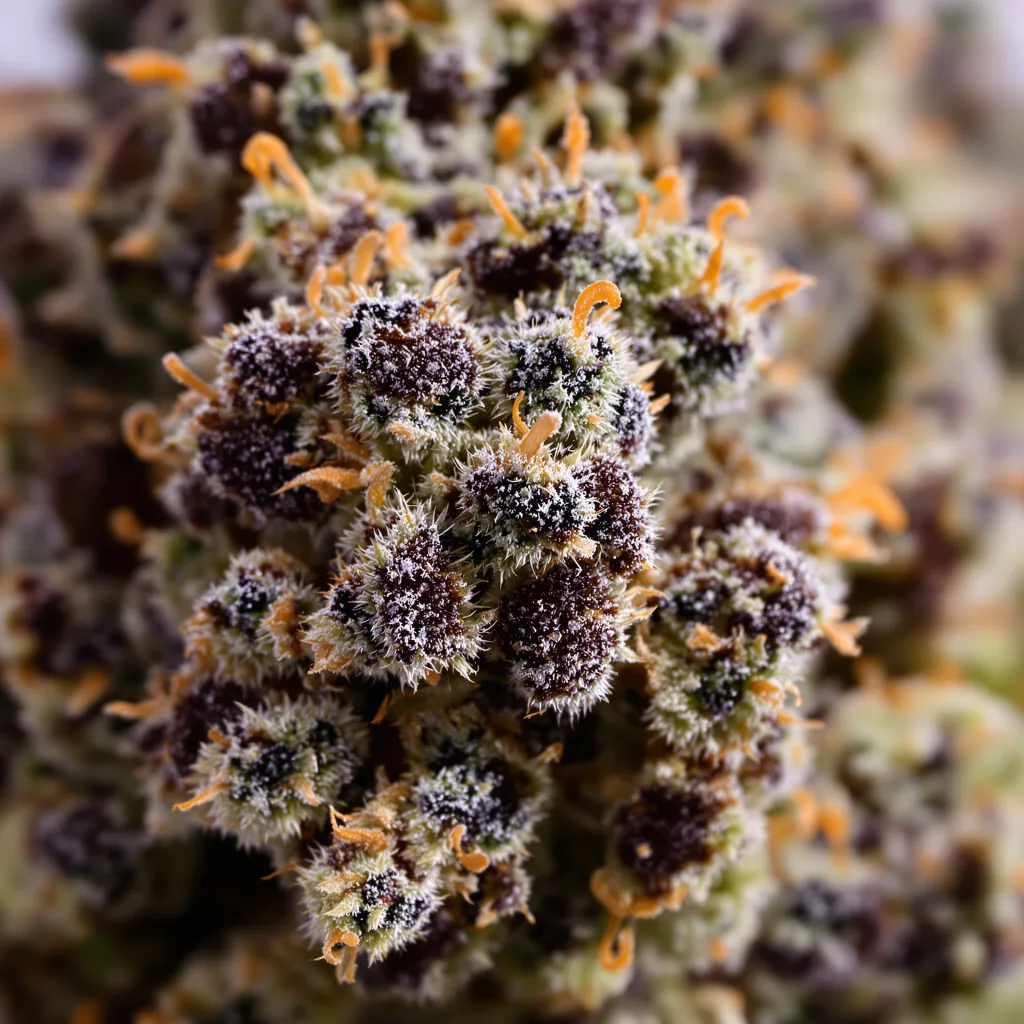
Harvesting and drying when the air is already damp
A dense cookies bud takes longer to dry than it looks like it should, and in a New Zealand autumn the ambient air is often already sitting above where you want your drying room. That combination is how good flower turns musty in the first week.
- Harvest in the morning after a dry run of days, not the day after rain. Wet plant material going into a dry room starts you behind.
- Dry at roughly 18–20°C with the relative humidity around 55–60%. In Christchurch in April you will usually need a small heater; in Whangārei you will usually need a dehumidifier.
- Keep air moving past the hanging flower, never blowing directly onto it.
- Expect 10 to 14 days. If a thick cookies cola is dry in five, the outside is dry and the inside is not, and the jars will tell you about it later.
- Break big colas down before drying if humidity is fighting you. A smaller piece dries evenly; a dense stacked one does not.
Cure slowly once jarred, burping daily for the first week. The sweet, doughy terpene character this lineage is known for develops in the cure more than at harvest, and rushing it loses precisely the thing you grew the plant for.
Questions New Zealand growers actually ask about cookies
Will a cookies plant finish outdoors in Canterbury or Otago?
A photoperiod cookies cross planted out in October is a real gamble inland, because the finish lands close to the first frosts and the autumn damp. The safer approaches are a greenhouse, which buys you several weeks at both ends, or an autoflower planted in late November so the harvest falls in February. Check the flowering time on the individual genetics report and count backwards from your own frost date rather than a regional average.
Why did my cookies buds go purple in March?
Cool autumn nights against warm days trigger anthocyanin expression in cultivars that carry the genetics for it, which includes a good part of the cookies family. It is a colour response to temperature, nothing more, and it says nothing about how the flower will turn out. Some phenotypes will show it strongly and others on the same packet will stay green.
Is cookies a sensible choice for a first grow?
Indoors, yes — it trains well, stays manageable in height, and is forgiving of most beginner mistakes other than overfeeding. Outdoors in a humid region it is a harder first plant than something with looser flower, because mould management requires you to have made good decisions months earlier. If this is your first outdoor season north of Auckland, consider running a cookies plant under a tent and something more open-structured in the garden.
How do I choose between the cookies crosses without reading every page?
Filter by what your site can support — finishing time first, then height, then flavour — using the strain finder to narrow by region and season length. Once you are down to two or three, put them side by side rather than reading the pages in sequence. If outdoor timing is the binding constraint, the autoflowering range solves it more reliably than any photoperiod selection will.
Does a cookies autoflower taste the same as the photoperiod version?
Close, in the sense that the terpene character carries through the lineage, but an autoflower has less time to build flower and generally produces a smaller, lighter plant. What you trade in size you gain in certainty about when it comes down. For a damp-autumn region that trade is usually worth making — see the Berner's Cookies Auto listing for its specifics.
Related Articles
Ready to Start Growing?
All 1,677 varieties, posted unbranded and tracked to both islands, each with whatever grow figures we could trace.
Shop Cannabis Seeds