Male cannabis: what the label controls and what it does not
Royal King Seeds
Cultivation team
A feminised label controls exactly one variable: the chance that the seed you planted carries male chromosomes and grows into a plant that produces pollen sacs instead of buds. It does not control anything else — not intersex flowers triggered by stress late in the season, not pollen drifting in from a plant you never planted, not finishing date, not how a cultivar copes with a damp Waikato April.
That distinction matters here more than most places, because the New Zealand outdoor season ends in autumn rain rather than autumn sun. A seeded head that would merely disappoint someone in a dry climate turns into a botrytis problem in Northland or the Bay of Plenty. So the useful question is not "are these seeds female" — it is "which of the three ways pollen reaches my flowers am I actually exposed to, and what do I do about each one".
The label removes genetic males, and that is the whole of its job
Feminised seed is produced by getting pollen out of a female plant rather than a male one. Because that pollen carries no male chromosome, the seedlings inherit female genetics from both sides. That is a real and useful piece of engineering: it means you can plant six seeds in October and expect six plants worth taking through to flower, instead of culling half of them in December and finding you have two heads where you planned six.
What that process cannot do is change plant physiology. Cannabis is functionally dioecious but not rigidly so — female plants retain the ability to produce staminate (pollen-bearing) flowers, and that ability is exactly what feminised seed production exploits. Buying female genetics does not delete the mechanism. It only means the mechanism has to be triggered by something rather than being written into the plant from the start.
Reliability of the process itself varies by breeder and by how carefully the donor line was selected. Rather than quote a figure, check the published data on the genetics report for whatever you are planting — the M-39 Feminised genetics report is the format, with germination and profile data listed per cultivar. Anything a shop tells you verbally is worth less than what is written on the cultivar's own page.
Reading preflowers at the node before anything opens
Even with feminised stock, learn to sex a plant. It takes thirty seconds per plant and it is the difference between catching one rogue and losing a whole hedge.
What you are looking at
Preflowers appear at the nodes, in the crook where a branch meets the main stem, usually starting a few nodes up from the base and working upward. A female preflower is a small pointed bract, teardrop-shaped, and within a few days it pushes out one or two white pistils. A male preflower is a rounded ball on a short stalk — the stalk is the tell. If you can see a tiny stem holding a sphere clear of the node, that is a staminate cluster forming, and it will open. No pistils, ever.
When to look, in Southern Hemisphere months
For photoperiod plants set out after the last frost in October, preflowers generally show while the plant is still in vegetative growth, through December and into January, well before the days shorten enough to trigger real flowering. That is your window.
- Late December: first node inspection. Use a loupe or a phone camera at maximum zoom — at this stage the structures are a millimetre or two across.
- Weekly through January: re-check every plant, not just the ones that look different. Vigour is not a sex indicator, whatever you have read.
- Early February, as flowering sets in: check the lower interior of every plant, where light is poorest and small clusters hide.
- March and April, in late flower: stop looking for balls on stalks and start looking for bananas among the calyxes. Different problem, covered below.
If you do find a genetic male among feminised seed, remove it before anything opens, and remove it whole. Do not prune the sacs off and keep the plant — you will miss some.
Intersex flowers are not male plants, and the fix is different
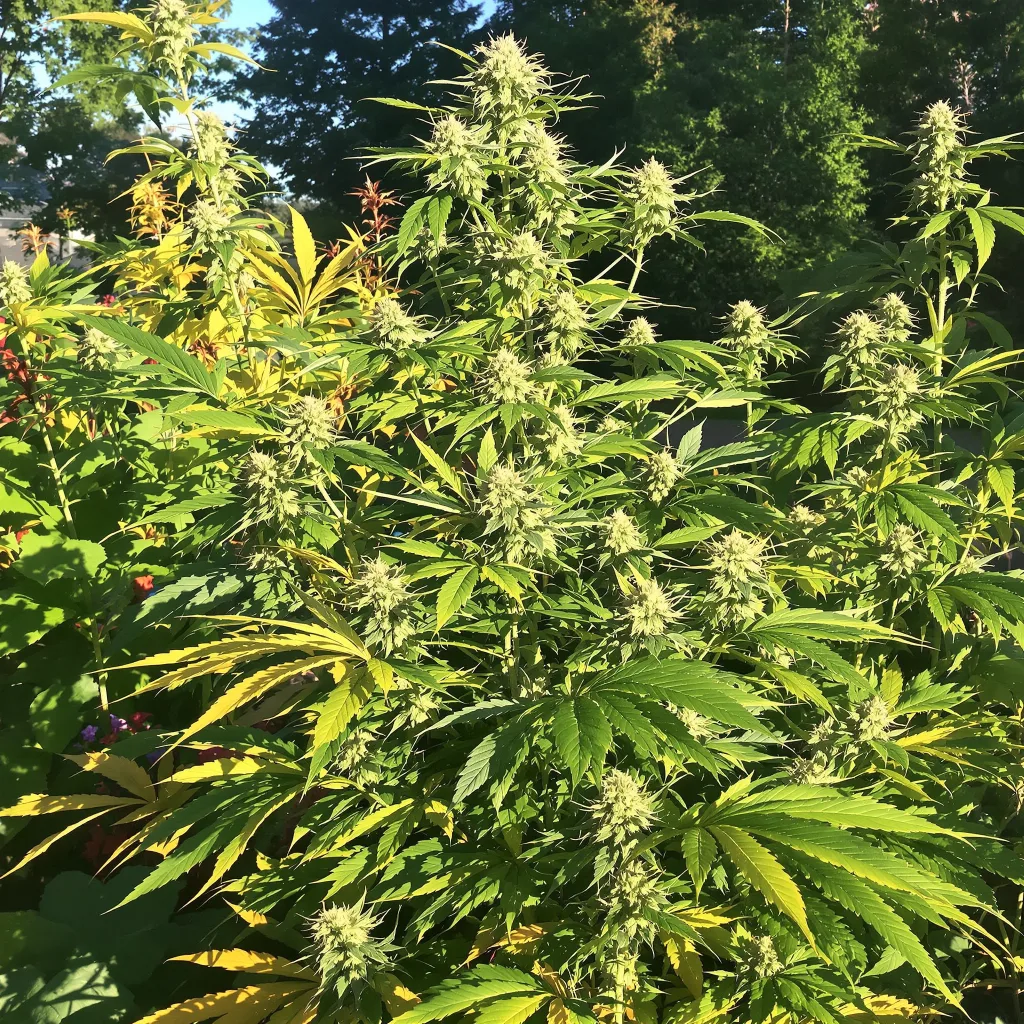
The failure most growers here actually meet is not a male plant. It is a female plant that throws staminate flowers late in flowering — single yellow-green "bananas" (anthers with no surrounding bract) pushing out from between the calyxes, most often on the topmost heads or on the side of a plant nearest a light source. They shed quietly, they self-pollinate, and by the time you notice, the lower bracts are already swelling around seed.
The triggers are environmental and mechanical, and every one of them is something you control:
- Light interruption in an indoor room or tent — a status LED, a zip that does not close, a door opened during dark hours. Outdoors, a security light or a driveway sensor pointed at the plant.
- Extended heat in a glasshouse. A closed Canterbury glasshouse in February can climb well past anything the plant handles comfortably, and the stress accumulates over days.
- Severe root stress — pots dried to the point of wilting, then flooded, repeated.
- Mechanical damage — a snapped branch in a Wellington southerly or after a nor'wester through Canterbury, left untied and hanging.
- Harvesting late. A plant taken well past maturity will start producing anthers as an end-of-life response. This is common in cultivars pushed to the edge of the season.
- Genetic tendency. Some lines are simply less stable. If you found bananas on the same cultivar in two different seasons under different conditions, believe the pattern.
Practically: pinch off individual anthers with tweezers as soon as you see them, spray nothing, and stabilise whatever caused it. One or two removed early costs you almost nothing. A plant producing them across every head in week six is going to seed itself regardless, and your decision becomes whether to harvest early or accept a seeded crop.
Pollen you did not plant: the drift window through a New Zealand February
The third route is the one no seed label can touch. Pollen is wind-borne, extremely fine, and travels much further than growers expect — well beyond a garden fence, and it stays viable for a period after release, longer in dry air than in humid air. If someone within reasonable distance is running unsexed plants from bagseed, or there is a long-established feral patch upwind, your feminised garden is exposed no matter what you bought.
The window is what matters. Your plants are receptive from the moment pistils emerge — roughly February onward for photoperiod plants planted in October — through most of flowering, and any male shedding in that period is a threat. Earlier-finishing cultivars shorten their own exposure simply by being done sooner. It helps to see the whole season laid out against those dates.
Timings shift with latitude — the north runs earlier and longer than inland Otago and Southland.
You cannot control a neighbour's garden, but you can reduce exposure. Grow where a fence, hedge or building sits between you and the prevailing wind. Bring plants under cover during high wind if they are in pots. And if you have a choice between a cultivar that wraps up in March and one that runs into late April, the shorter one spends fewer weeks with open pistils facing whatever is upwind.
Seeds in the bud make botrytis worse, not just yield worse
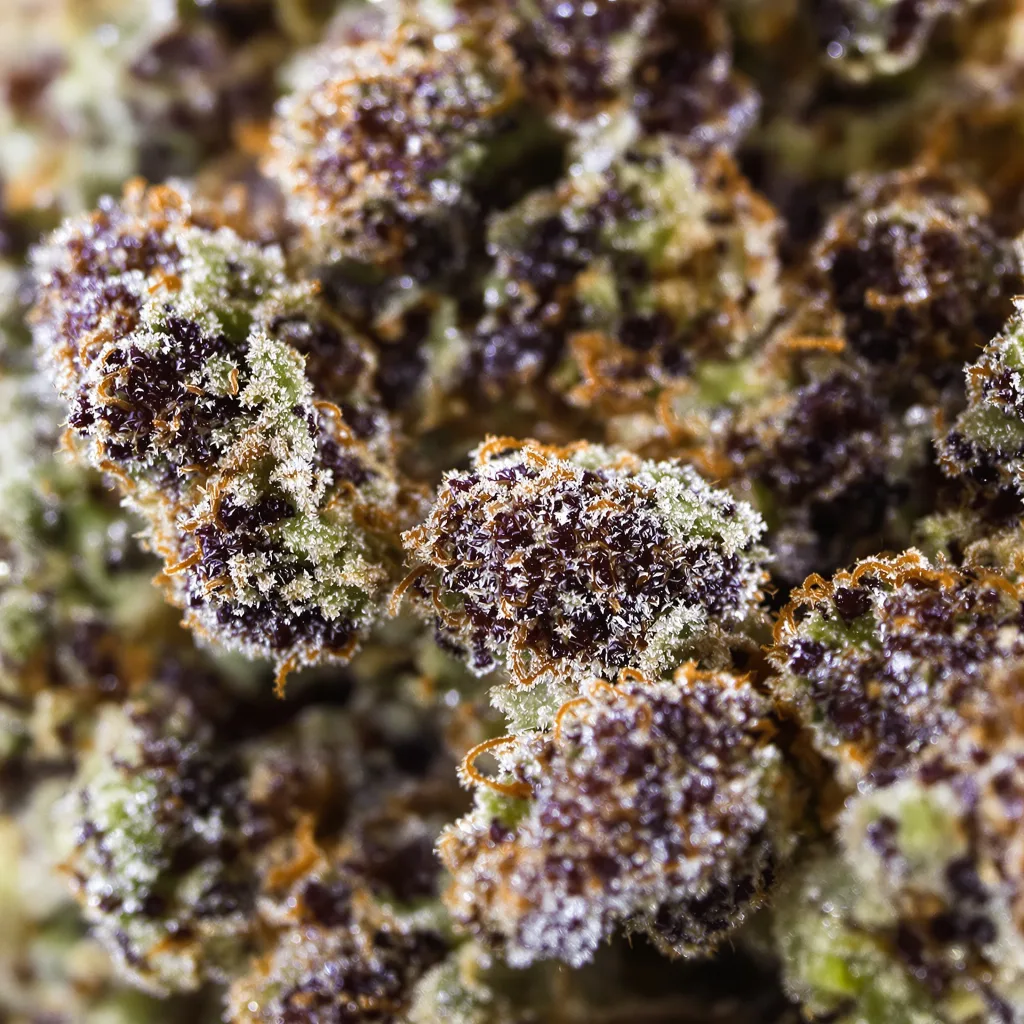
Elsewhere, pollination is a quality complaint. In a New Zealand autumn it is a rot accelerator. A pollinated calyx swells and thickens around the developing seed, and dense heads full of swollen bracts hold moisture in their cores far longer after rain than unpollinated ones do. Add a March that never quite dries out — Auckland, the Coromandel, anywhere on the West Coast — and you have created exactly the internal microclimate botrytis wants. The first grey patch usually turns up on the fattest head, in the middle, where nobody looked.
Which is why cultivar structure earns its place in this conversation. Open, airy heads dry faster after rain, tolerate the odd seed better, and give you a fighting chance if drift does reach you. Tight, dense, indica-leaning heads produce more per plant and punish you harder when things go wrong. Anything in the outdoor-suited cultivar range is worth reading with that trade-off in mind, and these three sit at different points on it.
If you are set on a dense-headed cultivar in a humid region, the mitigation is airflow and canopy management rather than seed choice — thin the interior, lift the plant off the ground, and check daily from mid-March. The Chemo Feminised genetics report is worth reading before you commit, because bud density and structure are the figures that decide how much of that work you are signing up for.
Sex has nothing to do with finishing date, and finishing date decides your season
It is worth stating plainly, because the two get muddled: feminised seed does not finish faster than regular seed. You are not buying time. What you gain is that every plant you water for five months is a plant that produces flower, so a garden sized for four heads needs four seeds rather than eight.
Finishing time is a separate axis entirely, and it is the figure that decides whether you harvest or watch frost take the crop. At 35°S in Northland, an eleven-week photoperiod cultivar has room to breathe. At 45°S inland in Central Otago, where frost can arrive in April, that same plant is a gamble and the safe choice is something that is dry and jarred before Anzac Day. Canterbury and Southland growers face the same maths with less margin than the Auckland forums assume.
Flowering times are spread widely even within the feminised range, and seeing that spread is more useful than any single recommendation.
1254 of 1254 varieties in this category publish a flowering time. Counted from the catalogue when this page was built.
Work backwards from your own first-frost date rather than a national average. If you are unsure which cultivars sit inside your window, the strain finder tool filters on flowering time, and the yield calculator is a reasonable sanity check on whether the plant count you are planning actually matches the space you have.
When a male plant is worth keeping, and how to keep it away from everything else
There is one context where males are the point: making seed. Feminised stock is a dead end for that — you need pollen from a selected male, and selection is genuinely difficult, because a male's own flowers tell you very little about what his daughters will do. Breeders judge males on structure, vigour, stem rub aroma, internode spacing, resin on the leaf surfaces, and above all on test crosses, which cost a full season each.
If you are heading down that path, the isolation problem is what will actually catch you out. Pollen goes everywhere. It sits on your sleeves, your hair, the dog. A male in the same glasshouse as flowering females is not isolated, and neither is one on the far side of the section on a windy Wellington day.
- Separate airspace, not separate space. A different structure with its own door, ideally downwind of nothing you care about.
- Bag the branch. Collect pollen inside a paper bag tied at the stem, and cut the branch before the sacs split rather than after.
- Change clothes before going near flowering plants. Wash your hands and forearms.
- Store dry and cold. Pollen mixed with flour in a sealed container, kept cold, holds viability far longer than pollen left at room temperature.
- Pollinate deliberately. A single lower branch on one plant, painted with a brush and then rinsed and bagged, gives you plenty of seed without seeding the whole plant.
Autoflowers change the timing of the risk, not the risk itself
Autoflowering plants are feminised too, and they are not sex-stable by virtue of being autos. What changes is the schedule. An auto starts flowering on its own clock regardless of daylength, which means the vegetative window where you would normally spot preflowers is compressed to a couple of weeks, and any stress you apply lands during flowering rather than before it. Transplant shock, a hard defoliation or a week of glasshouse heat hits an auto at a stage when it cannot recover the way a photoperiod plant in December can.
The upside is the exposure window. An auto sown in November can be finished before the worst of the autumn damp, and a second sowing in December can still make it in the north. Fewer weeks with open pistils means fewer weeks exposed to drift and to botrytis both. Ranges are listed across the autoflowering cultivar range, and the trade-off against a photoperiod plant is easier to see side by side.
| M-39 Feminised | Ripped Bubba Auto | |
|---|---|---|
| Type | Photoperiod | Autoflowering |
| Lean | Hybrid | Hybrid |
| Listed THC | 16% | 20% |
| Flowering | 39-43 days | 50-60 days |
| Height | Short | 90-120 cm. Medium |
| Indoor yield | 350-450 gr | up to 300 g/m2 |
| Outdoor yield | 500 gr | up to 300 g/plant |
| Difficulty | Easy | Easy |
| Price from | $25.19 | $25.19 |
Whichever you run, the discipline is identical: inspect nodes early, keep the environment boring, and take the plant at maturity rather than pushing it a fortnight further for a slightly bigger number.
Questions New Zealand growers actually ask
I bought feminised seeds and one plant grew balls. What went wrong?
Either the plant is a genuine genetic male that slipped through the seed line, or — far more often — it is a female throwing staminate flowers in response to stress. Look at the structure: balls on short stalks clustered at the nodes point to a male, while single banana-shaped anthers pushing out from inside the flowers point to an intersex response. Remove a male entirely; for anthers, pinch them out and fix the light leak, heat or root stress that caused them.
Can one male in the neighbourhood really seed my whole garden?
Yes. Pollen is fine, wind-carried and travels a long way, and a mature male sheds an enormous amount of it over days. There is no spray or barrier that reliably stops it in an open garden. Your realistic defences are physical shelter from the prevailing wind and a cultivar that finishes early enough to spend fewer weeks with receptive pistils.
Is seeded bud still worth harvesting?
It is usable, though the seeds take up mass that would have been flower and the swollen bracts hold moisture, which raises the botrytis risk through a damp March. If you find seed forming, prioritise airflow, check the interior of every head daily, and be willing to harvest a few days early rather than lose heads to rot. Dry seeded material more carefully than usual, because the seeds themselves carry moisture.
Do I still need to check my plants if I only ever buy feminised seed?
Yes, and weekly. The label handles genetic males; it does nothing about intersex flowers or incoming pollen, and both of those are triggered by conditions rather than genetics. Thirty seconds per plant through December and January, then a look at the interior heads through March, catches almost everything that matters.
Which is the safer bet for a first outdoor season down south — feminised or auto?
An autoflower, usually, purely because it takes the calendar out of the argument and is likely to be finished before an inland Otago frost. A photoperiod plant gives you more size and more time to correct mistakes, but it has to survive to April to do it. If you are weighing specific cultivars, the side-by-side strain comparison lays out flowering time and height together, and the grower and ordering FAQ covers the practical side of getting seed to you before planting time.
Ready to Start Growing?
All 1,677 varieties, posted unbranded and tracked to both islands, each with whatever grow figures we could trace.
Shop Cannabis Seeds