Purple Trainwreck: A New Zealand Grower's Guide
Royal King Seeds
Cultivation team
Purple Trainwreck is a cross of Trainwreck with Granddaddy Purple, and that pairing is the whole story: the Trainwreck side stretches and finishes late, the Granddaddy Purple side packs the flowers tight and brings the colour. In a New Zealand autumn, late plus dense is the combination that gets you into trouble, so if you are growing this lineage outdoors south of about Hawke's Bay you need to be choosing the fastest, most open phenotype you can find and planning to cut in the first half of April at the latest.
That is the short answer. The longer one is about which half of the cross you are actually getting, because Purple Trainwreck is not a stabilised line — different seed lots lean hard one way or the other, and a Trainwreck-dominant plant and a Granddaddy Purple-dominant plant want completely different management in our climate. We do not list Purple Trainwreck itself, so part of this guide is about where its traits show up in genetics that are on the shelf, and how to pick on the figures that matter rather than on a name.
What you are actually buying when a packet says Purple Trainwreck
Trainwreck is an old, long-flowering, sativa-leaning hybrid known for spearmint and pine on the nose and a reported effect that growers describe as sharp and talkative rather than sedating. It grows tall, it stretches hard after the flip, and the flowers tend to be spear-shaped with some air through them. Granddaddy Purple is the opposite temperament — indica-structured, heavy grape and berry aroma, short internodes, fat rounded bud sites, and a reported effect at the heavy, settled end of the range.
Cross the two and you get a wide spread of offspring. Some lean to the mother's architecture and keep the open spear structure with a purple flush on top; some come out squat and solid with the Trainwreck aroma buried under grape. Because the cross has been made by a number of breeders over the years with different parent stock, the published description you read for one seed lot may not match the plants that come up from another. Treat any stated flowering window on a packet of this cross as an average of a wide range, not a promise.
If what drew you to the name is the purple, that trait is far better served by a line that has been selected for it. Our purple genetics range exists because colour expression is frustrating to chase in an unstable hybrid and straightforward when it has already been fixed.
Flowering length is the figure that decides your region
Everything else about a cultivar is negotiable in New Zealand. Finishing time is not. A plant that needs an extra two weeks in Northland is a minor inconvenience; the same two weeks in inland Canterbury is the difference between a cured jar and a mouldy write-off.
Trainwreck-leaning phenotypes of this cross are the slow ones. Expect them to want longer than a typical indica-dominant hybrid, and expect that extra time to land exactly when autumn rain arrives. Granddaddy Purple-leaning phenotypes finish earlier but reward you with the densest, least ventilated flowers on the plant. Neither end of the spread is ideal for a wet South Island autumn, which is why growers below about 41°S usually end up either pulling the plant early and accepting cloudy trichomes, or moving the whole project indoors.
Before you commit to any purple line outdoors, it is worth seeing how the flowering times in that category actually sit against each other.
113 of 113 varieties in this category publish a flowering time. Counted from the catalogue when this page was built.
What you should take from that spread is the gap between the fast end and the slow end. Two or three weeks of difference on paper becomes much larger in practice, because the last fortnight of flower in April is the fortnight with the worst weather and the shortest drying days.
Working back from your own frost and your own rain
The planting calendar for a photoperiod plant here is simple to build and easy to get wrong. Seedlings go out after the last frost, which for most of the North Island is October and for inland Otago and Southland can be late November. Flowering starts as daylight falls away through February. Harvest runs from March into April. The risk is not that you run out of light — it is that you run out of dry days.
Build your season backwards from two dates, not one:
- Your first frost. Inland Canterbury, Otago and Southland can see it from April. Coastal Northland and the Bay of Plenty may not see one at all.
- Your autumn rain pattern. West Coast growers are fighting water from March regardless of temperature. Gisborne, Hawke's Bay, Nelson and Marlborough usually get a drier, sunnier run into April, which is the single biggest advantage those regions have for dense-flowered cultivars.
- Wind. Wellington and the Canterbury nor'wester will thrash a tall Trainwreck-structured plant that has not been topped and staked early.
- Your drying space. A plant cut in late April needs somewhere with moving air and stable temperature. If you have not solved that, pull earlier.
If the month-by-month shape of the season is not yet second nature, this is the version worth printing out.
Timings shift with latitude — the north runs earlier and longer than inland Otago and Southland.
For most New Zealand outdoor growers, the practical rule with this lineage is that anything which cannot be cut by mid-April is a gamble. Our cultivars selected for outdoor growing are filtered on that basis first and yield second.
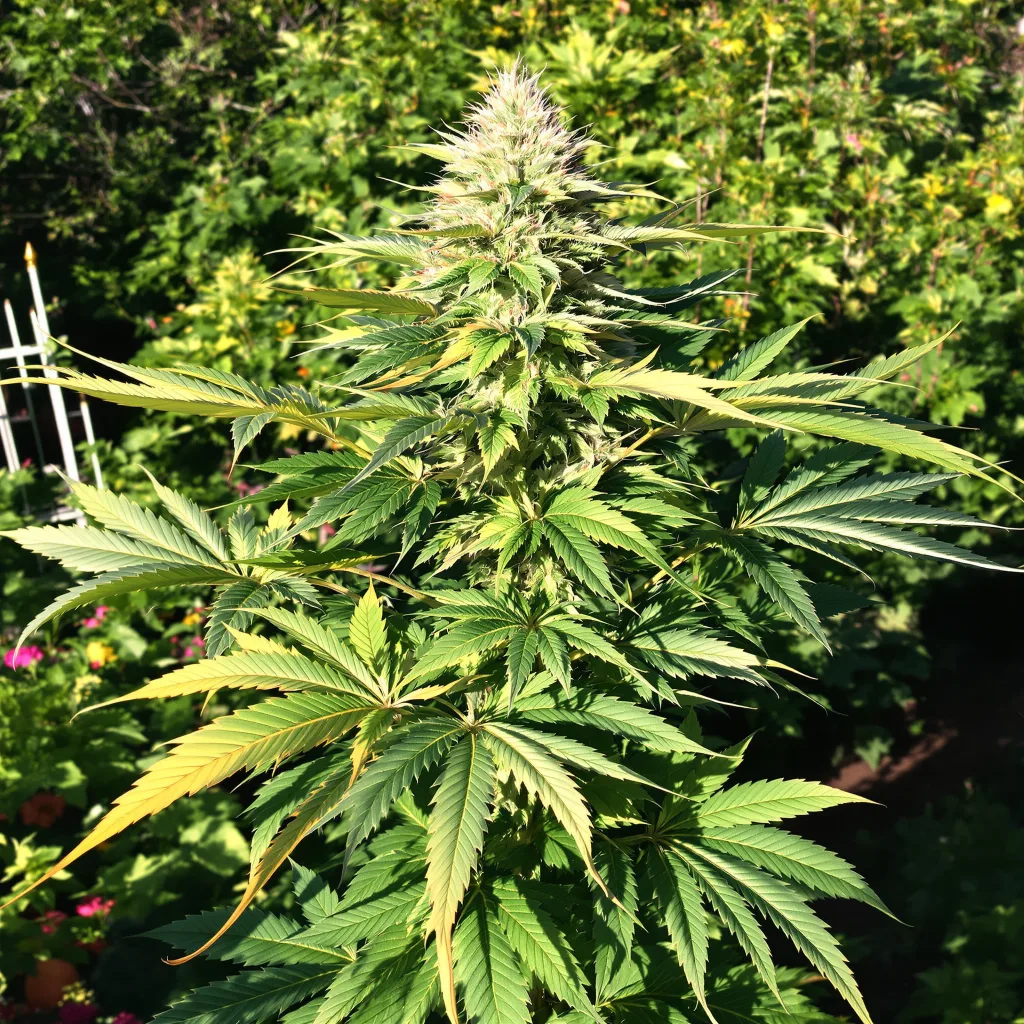
Why the purple shows up more reliably here than in most places
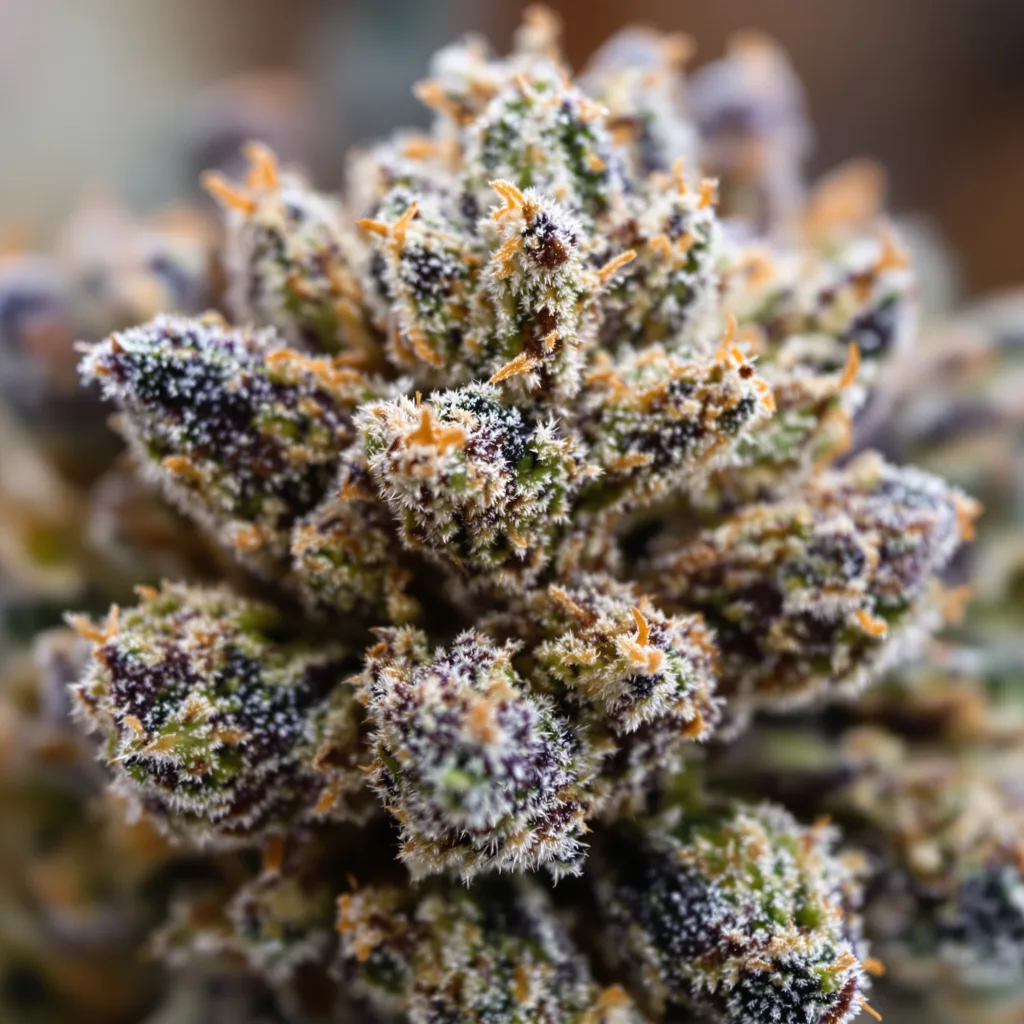
Anthocyanin expression needs two things: the genetic capacity to produce it, and a trigger. The trigger is usually a drop in night temperature while the plant is in late flower, with a wide gap between day and night. A New Zealand autumn delivers that almost everywhere once you get into late March — warm clear days, cold nights, especially inland and at altitude.
That means a purple-capable line often colours up more convincingly in Canterbury or the Central Plateau than it would in a warm subtropical autumn. Growers in Northland and the upper North Island sometimes see much less colour on the same genetics simply because the nights never drop far enough. It is not a fault in the seed.
Two things worth being clear about. Colour is not a potency indicator — a deep purple flower and a green one from the same plant carry the same chemistry, and the published cannabinoid and terpene figures on each cultivar's genetics report are the place to check that, not the photographs. And chasing colour by deliberately chilling a tent at night costs you resin and ripening speed. Let the weather do it or let the genetics do it.
Cold nights and dense flowers are a bad pair outdoors
The same cold nights that bring the colour also push relative humidity up inside the canopy at exactly the point when the flowers are at their largest. That is the botrytis window. On a Granddaddy Purple-leaning phenotype of a Trainwreck cross — tight, heavy, rounded colas — rot starts in the core where you cannot see it, and the first sign is usually a single leaf that pulls out of the bud with no resistance. Check the biggest colas daily from the start of April, and cut the affected section out wide and immediately.
The purple lines we list, and how they split the difference
If the appeal of Purple Trainwreck is grape-and-berry aroma with colour, that comes from the Granddaddy Purple side, and you can get it directly. Granddaddy Purple Feminised is the parent itself rather than an unstable cross of it, which means far less phenotype lottery — the published flowering window, structure and chemistry are on its Granddaddy Purple genetics report, and the plants you get will sit close to it.
If the appeal is the lift and the sharper, more energetic reported effect from the Trainwreck side, that is a different search, and the energising cultivars category is a more direct route than hoping a hybrid leans the right way.
These four cover the ground that Purple Trainwreck sits in, from the full photoperiod indica through to two autos that sidestep the autumn problem entirely.
Worth noting that Purple Star Feminised tends to carry a more open flower structure than the Granddaddy Purple line does, which matters a great deal more in Hokitika than it does in Hastings.
An autoflower is the honest answer for the lower South Island
A photoperiod plant in Invercargill or Alexandra is racing a frost it will often lose. An autoflower is not, because it runs on age rather than daylight — you can start it in November, cut it in February or early March, and be fully clear of the wet end of autumn. For growers who want purple colour outdoors south of Christchurch, that is usually the better plan, even though the colour trigger is weaker in a warmer February.
The trade-off is real and worth stating. An autoflower gives you less time to recover from a mistake. There is no vegetative holding pattern, so a stalled seedling in week two is yield you will never get back. Transplant shock costs more than it does on a photoperiod plant, which is why most growers start autos in their final container.
Purple Alien OG Auto and Purple Monkey Balls Auto are the two purple-capable autos we list, and they behave differently enough in height and structure to be worth putting side by side before you buy.
| Purple Alien OG Auto | Purple Monkey Balls Auto | |
|---|---|---|
| Type | Autoflowering | Autoflowering |
| Lean | Indica | Indica |
| Listed THC | 14% | 19% |
| Flowering | 55-65 days | 55-65 days |
| Height | Medium | 90-120 cm. Medium |
| Indoor yield | up to 200 g/m2 | up to 300 g/m2 |
| Outdoor yield | up to 300 g/plant | up to 350 g/plant |
| Difficulty | Easy | Easy |
| Price from | $24.29 | $26.09 |
If you want to go wider than purple, the full autoflowering range is where the fast-finishing options live.
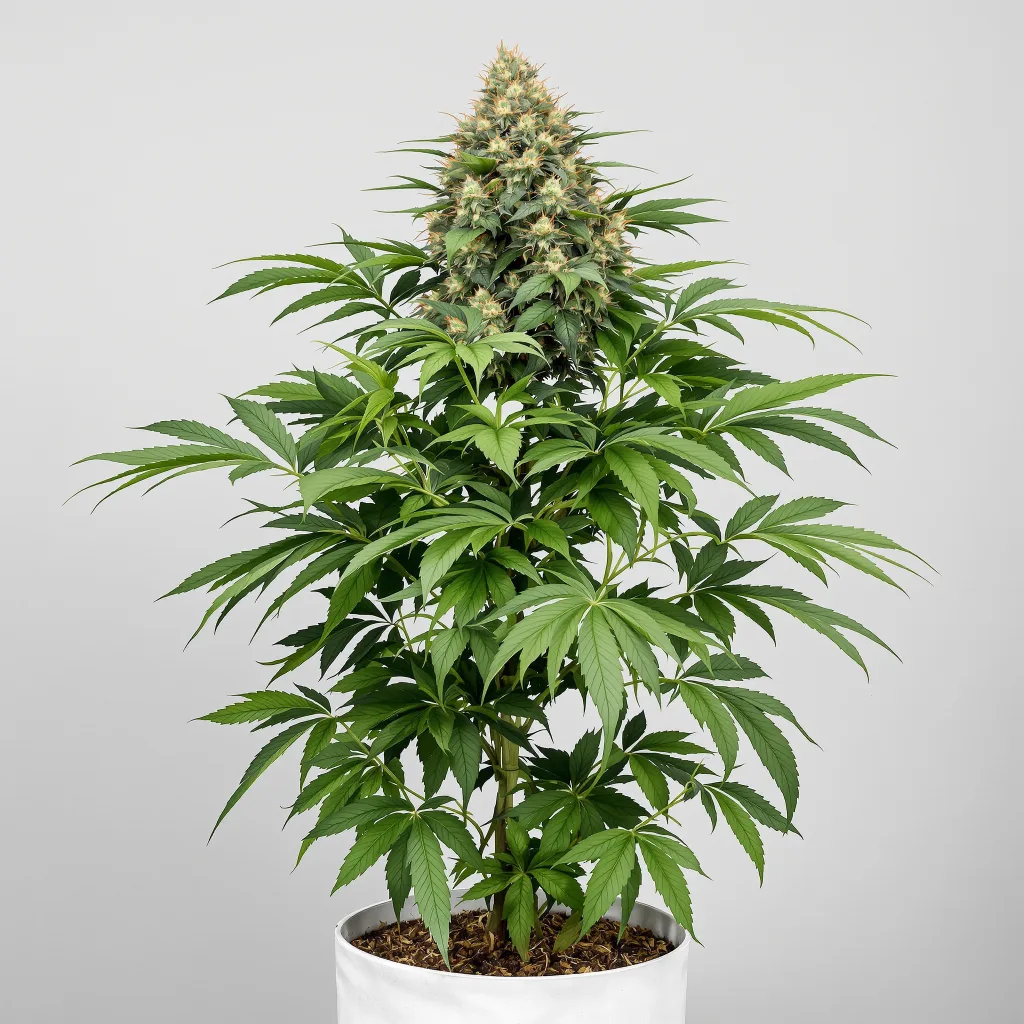
Indoors, a Trainwreck-structured plant needs training before it needs food
Under lights, the finishing-time problem disappears and the stretch problem takes its place. Trainwreck-leaning plants can double or more after the flip. If you are running a 1.2 metre tent with the light already near the top, top the plant once in veg, run a horizontal net, and tuck the growth into it through the first fortnight of flower rather than trying to fix the height later.
Practical sequence for a tent grow of anything in this lineage:
- Top above the fourth or fifth node once the plant is growing strongly, not before.
- Net at canopy height before you flip, and spread the main shoots out flat.
- Flip earlier than feels right — plan for the plant to at least double.
- Strip the lower third at around day 21 of flower. Dense purple genetics produce popcorn down there that never ripens and holds moisture.
- Keep air moving through the canopy, not just across the top of it, for the whole of late flower.
On feeding, dense indica-structured flowers will take a solid phosphorus and potassium load mid-flower, but Trainwreck-leaning phenotypes are noticeably easier to burn on nitrogen late. If your leaf tips are clawing and darkening in week five, back off before you add anything. Our nutrient calculator is a reasonable starting point for a schedule, and the yield calculator will give you a realistic grams per square metre expectation for your tent size and light before you talk yourself into a bigger number.
How to choose when the name is not on the shelf
Growers arrive at a specific strain name for one of three reasons: they have had the flower and liked it, they like the look of the photographs, or they heard it mentioned. None of those tells you whether the plant finishes before your frost, and that is the thing that decides whether you get anything at all.
A better approach is to work from the traits backwards. Decide your latest possible cut date. Decide whether you need an open flower structure because of where you live. Then filter on those two, and treat aroma and reported effect as the tie-breaker rather than the opening question. The strain finder is built around exactly that order of decisions, and the side-by-side comparison tool is useful once you are down to a shortlist of two or three.
Questions New Zealand growers ask about this lineage
Will Purple Trainwreck finish outdoors in Christchurch?
Marginal, and it depends entirely on which phenotype you get. A Granddaddy Purple-leaning plant has a reasonable chance of being ready in the first half of April; a Trainwreck-leaning one will likely still be ripening when the weather turns. If you are in Canterbury and want the purple, a stabilised purple line or an autoflower started in November is the far safer plan.
Do I need cold nights to get the purple colour?
For most purple-capable genetics, yes — a decent gap between day and night temperature during late flower is the usual trigger, which is why colour shows up more strongly inland and at altitude than it does in a mild Northland autumn. Some lines colour regardless. Deliberately chilling a tent to force it is not worth the ripening time you lose.
Does the purple mean it is stronger?
No. Anthocyanin pigment and cannabinoid content are unrelated, and a purple flower is not automatically more potent than a green one from the same plant. The listed figures on each cultivar's genetics report are the only sensible reference.
What is the biggest risk growing dense purple buds outdoors here?
Botrytis, by a wide margin. Our autumn arrives damp rather than dry, and tight flowers trap moisture in the core where you cannot see it until a leaf pulls free with no resistance. Inspect the largest colas daily from early April, remove affected tissue generously, and be willing to cut a week early rather than lose the lot.
Is it better to grow this indoors instead?
If you have a tent, yes — indoors removes the frost and rain variables entirely and lets a longer-flowering plant take the time it actually needs. The trade is that you have to manage the stretch, which means topping and netting before the flip rather than after. The indoor-suited cultivars category is filtered for plants that behave in a confined canopy.
Related Articles
Ready to Start Growing?
All 1,677 varieties, posted unbranded and tracked to both islands, each with whatever grow figures we could trace.
Shop Cannabis Seeds