Growing Weed Outside in New Zealand: Working Back From Your Local Frost Date
Royal King Seeds
Cultivation team
The first date you need is not a sowing date — it is the date your own garden usually gets its first autumn frost, and in most of New Zealand that falls somewhere between mid-March and mid-May depending on how far south and how far inland you are. Everything else in an outdoor season is counted backwards from that single number: when the plant has to be cut, how long it can be allowed to flower, when it goes in the ground, and when the seed goes into the propagator.
Growing weed outside here runs the opposite way to almost everything written about it online. Our season opens in spring with plant-out around October, runs through a long summer veg, flips to flower as the days shorten after the December solstice, and finishes through March and April. If a guide tells you to harvest in September or start seeds in April, it was written for the Northern Hemisphere and every date in it is six months out.
Three dates decide the whole season, and only one of them is yours to choose
An outdoor grow in New Zealand is bracketed by two dates you do not control and one you do. The last spring frost sets the earliest safe plant-out. The first autumn frost — or, further north, the first long damp spell — sets the hard deadline for harvest. Between them sits the one date you actually choose: when you sow.
The flip to flowering is not a choice either. Photoperiod plants outdoors respond to the shortening days after the solstice on roughly 21 December, and most varieties start showing pistils somewhere in the first few weeks of January. A plant at 46°S gets a later, sharper daylength decline than one at 35°S, so southern plants often start flowering slightly later and then have less autumn to finish in. That is the squeeze: the further south you are, the shorter the usable flowering window, from both ends at once.
So the practical sequence is: find your frost date, subtract a safety margin, subtract the cultivar's flowering time, and see whether the answer lands before mid-January. If it does not, the variety is wrong for your site — not the grower.
Finding your actual frost date, not your region's
Regional averages are a starting point and nothing more. Coastal Northland and much of the Auckland isthmus may go an entire year without a ground frost. Hamilton and the inland Waikato frost reliably from April. The Canterbury Plains inland of the coast, the Mackenzie, Central Otago and inland Southland can see their first frost in late March in a cold year, and Central Otago in particular can throw one at almost any point in the shoulder seasons.
Within a single town, the spread is large. Frost pools in low ground. A sheltered north-facing slope with a block wall behind it will run two to four weeks later into autumn than a flat paddock three hundred metres downhill. Sites under tree canopy or a veranda also lose less heat overnight to a clear sky, which is why a tomato under an eave survives a night that flattens the one in the open.
- Check the long-term climate record for the nearest station, not the forecast — you want a typical first-frost date, not next week.
- Ask neighbours who grow tomatoes. Anyone who has gardened the street for a decade knows the week the frost usually arrives better than any map.
- Walk your site at dawn in late autumn the year before, if you can. White on the lawn shows you exactly where the cold sits.
- Subtract two weeks from whatever date you settle on. That is your working harvest deadline.
North of about Taupō, frost is often not the binding constraint at all. The deadline there is set by the first run of warm, still, wet weather — typically from late March — which is when botrytis does its damage. Treat that as your frost date equivalent and count back from it the same way.
Counting backwards: a worked calendar for a mid-latitude site
Take a grower inland of Christchurch with a typical first frost around 20 April. Two weeks of margin puts the harvest deadline at about 6 April. If the plant starts flowering in the second week of January, there are roughly twelve weeks of flowering window — but that is the absolute ceiling, and nobody wants to be cutting on the last possible day in weather that has already turned.
Build in more room than that. A variety listed at eight to nine weeks of flowering would be finished in mid-March with three clear weeks spare, which is comfortable. A ten-week finisher lands late March, workable. Anything listed at eleven weeks or more is a gamble on that site, because outdoor flowering almost always runs longer than the indoor figure — cooler nights, lower light intensity in autumn and a wet week or two all stretch it.
Now go the other way from plant-out. If the last frost risk clears around the second week of October, the seedling needs to be hardened off and ready that week, which means sowing in the second half of September. Three to four weeks from sowing gives a seedling with four or five nodes and a root system that fills a one-litre pot — big enough to handle wind and slugs, small enough that it has not gone rootbound.
The whole shape of a New Zealand outdoor season, month by month, looks like this.
Timings shift with latitude — the north runs earlier and longer than inland Otago and Southland.
Hold the plan loosely in the shoulders and tightly in the middle. Spring is the part most people get wrong, usually by starting too early.
Why sowing in August usually costs you, not gains you
It feels productive to get seeds going in late winter. In practice, a seedling put outside in August or early September is sitting in daylengths short enough that some varieties will begin to flower, then revert to vegetative growth when the days lengthen in October. The result is a plant with twisted, single-bladed leaves and a month of wasted growth, often with foxtailed stems that never quite recover their symmetry.
Early sowing also means a bigger plant indoors for longer, under weaker light than the sun, which produces stretch rather than structure. A leggy 60 cm seedling with 3 cm internodes is worse off in October than a stocky 20 cm one sown a month later. Root-bound plants pushed to grow in cold soil also stall after transplant, and that stall costs you the fortnight you thought you were buying.
Starting indoors or in a glasshouse
A sunny windowsill works, but a simple light over the seedlings holds them compact. Keep soil temperature up — germination and early root growth slow badly below about 18°C — and water sparingly, because cold wet seedling mix is the single most common way a first grow dies. Our walkthrough of germination method and realistic timings covers what a failed pop usually means.
Hardening off
- Seven to ten days before plant-out, start putting seedlings outside in a sheltered spot for an hour or two, building up daily.
- Include wind, not just sun. Stem thickness is a response to movement; a plant that has never been shaken will snap in its first Wellington southerly or Canterbury nor'wester.
- Bring them in overnight until the frost window has genuinely closed.
- Transplant late in the day or on an overcast one, and water in immediately.
Finishing time is the number that matters, so shop by it
Yield figures sell seeds; finishing time decides whether you get any yield at all. A heavy-cropping twelve-week sativa-leaning plant in Gore returns less than a modest eight-week one, because the first will be cut wet and mouldy in late April and the second will be in jars by mid-March. Read the flowering window first, then everything else.
Flowering times vary widely even within a category, which is worth seeing before you commit to anything.
603 of 603 varieties in this category publish a flowering time. Counted from the catalogue when this page was built.
Three cultivars that get picked often for New Zealand outdoor sites, with their listed flowering times, type and prices pulled from the catalogue:
For the full range, the outdoor-suited cultivar range is the place to start, and the strain finder, filtered by flowering time will narrow it by the figure that actually matters on your site. Cannabinoid content, terpene panel and germination rate for anything you are considering are published on its own genetics report — the Permafrost Feminised genetics report is an example of what that page carries.
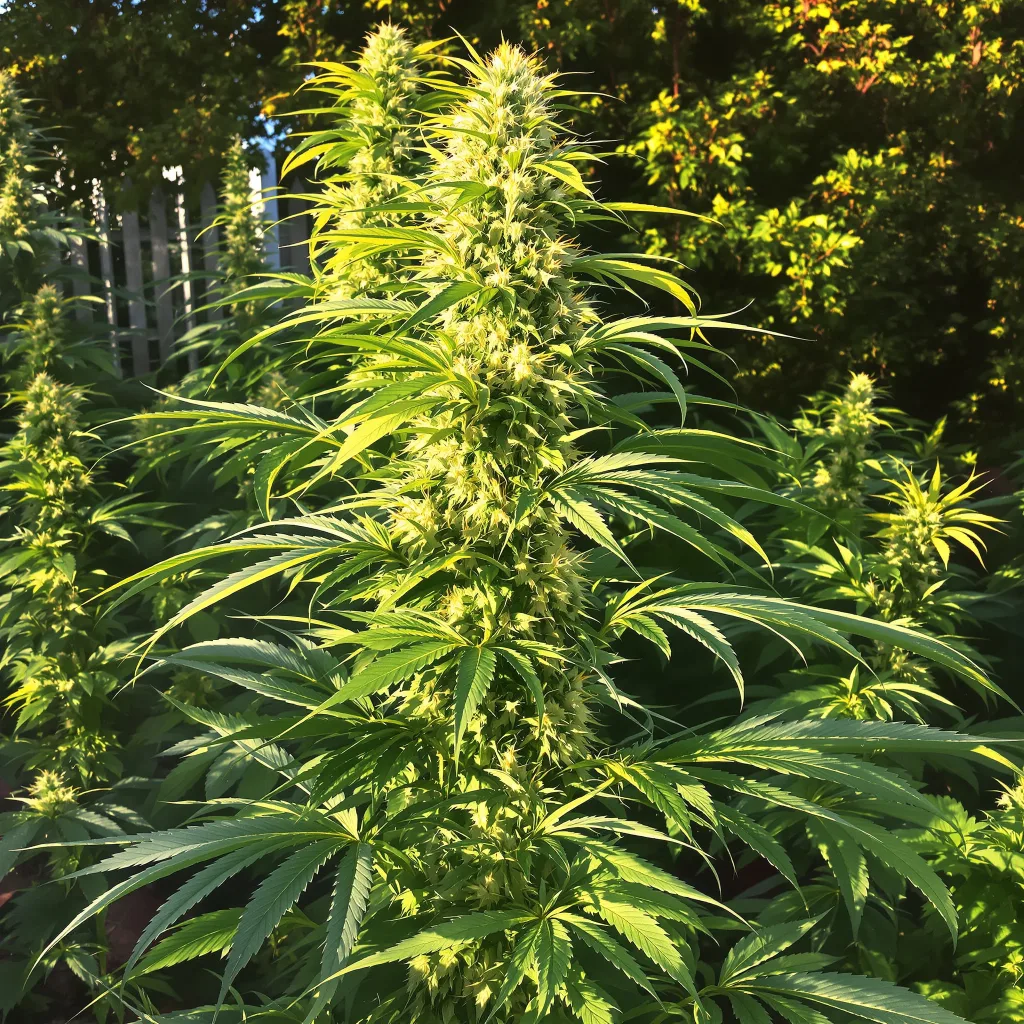
In the top half of the country, damp beats frost to the finish line
Autumn in Northland, Auckland and the Bay of Plenty does not arrive dry. It arrives warm, humid and still, often with several days of drizzle in a row, and that is exactly the weather botrytis wants: 15–20°C, high humidity and no air moving through a dense cola. A bud rots from the inside, so the first sign is usually a single leaf in the middle of a flower going crisp and grey-brown while everything around it looks fine. By the time you see it from the outside, the core is already gone.
Structure matters more than vigour for a wet autumn. Open, airy flowers dry out between showers; tight golf-ball density traps water at the stem and holds it. That is an argument for choosing a variety with a looser bud set and a shorter finish, and against the biggest-yielding thing on the shelf.
- Space plants wider than feels necessary — at least 1.5 metres between mature plants outdoors, more on a sheltered site.
- Strip the lower third of leaf and small growth before flowering starts, so air moves through the base.
- Train wide, not tall. Early topping and tying branches outward opens the centre of the plant where rot starts.
- Shake plants after rain, gently, to throw water off the colas before it sits overnight.
- Inspect every two or three days from the moment flowers firm up. Cut out any affected bud with a wide margin and take it away from the plant immediately.
Weighing two options against each other on bud structure and finishing time is usually more useful than reading each listing separately.
| Permafrost Feminised | Frosty Feminised | |
|---|---|---|
| Type | Photoperiod | Photoperiod |
| Lean | Sativa | Hybrid |
| Listed THC | 20% | 26% |
| Flowering | 70-80 days | 55-65 days |
| Height | Short | Short |
| Indoor yield | 400 gr/m² | up to 450 g/m2 |
| Outdoor yield | up to 400 g/plant | up to 450 g/plant |
| Difficulty | Easy | Intermediate |
| Price from | $28.79 | $24.29 |

Wind, rain and sun: matching the plan to your region
The frost calendar is only half the picture. Gisborne, Hawke's Bay, Nelson and Marlborough get the sunshine hours and the drier autumn, which is as close to an easy outdoor season as the country offers — the limiting factor there is usually water in January and February rather than anything else. Keep a mulch on the soil and expect a large plant in a warm week to drink far more than you think.
Wellington and coastal Canterbury are wind problems before they are anything else. Staking is not optional: a flowering plant carrying water weight has enormous leverage, and a snapped main stem in March is a total loss. Put stakes in at plant-out, not in February when the roots are everywhere, and tie loosely with soft ties that will not cut into swelling stems.
West Coast growers are dealing with rainfall in a different league, and the honest answer there is that an unprotected outdoor plant in a wet autumn is a coin toss. A simple clear roof over the plants — open on all sides so air still moves — changes the odds completely without changing the light much.
Inland Otago and Southland are the frost sites. Plant in pots or fabric bags rather than the ground if you can, because a 40-litre bag can be shifted against a north wall or under cover on the night a frost is forecast, and that flexibility is worth more than the extra root volume of a garden bed.
Autoflowers let you ignore the solstice, but not the frost
An autoflowering plant runs on age rather than daylength, which uncouples it from the January flip entirely. Sow in late October and it flowers regardless, finishing roughly ten to twelve weeks from sprouting depending on the variety. That makes it the obvious answer for a southern site with a short window, and it allows a second staggered sowing in November that finishes well before any frost.
The trade-off is size. An autoflower will not use a full New Zealand summer the way a photoperiod plant does, so yield per plant is smaller — you make it up with numbers and succession rather than with one big plant. There is no vegetative period to extend if something goes wrong, either, so a stalled seedling is lost growth you cannot get back. The autoflowering seed range is worth a look if your frost date is in March, and the yield calculator will give you a sense of what a given plant count returns before you commit to a layout.
Photoperiod feminised seed still wins on total weight anywhere from Canterbury north, where the season is long enough to use. South of that, or on a site that frosts early, the autoflower route removes the single biggest risk from the plan.
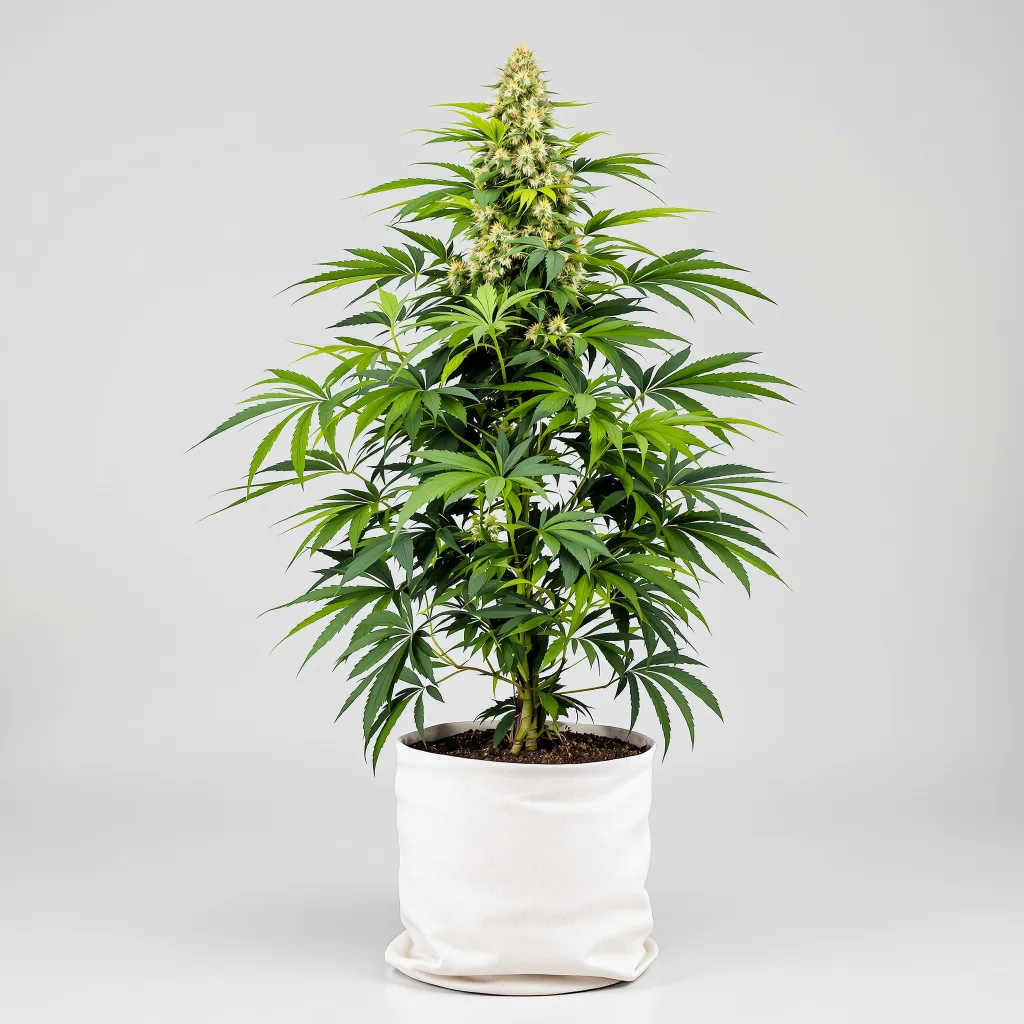
When the weather moves your deadline
Forecasts will sometimes hand you a frost a fortnight early. You have three responses, and the right one depends on how far along the plant is.
If flowers are still swelling and pistils are mostly white, protect and keep going. Frost cloth or an old sheet draped over a frame — not touching the leaves — holds enough radiated heat to get a plant through a light frost of a degree or two below zero. Water the soil in the afternoon beforehand; damp soil holds and releases more warmth overnight than dry. Pots can simply be moved under an eave for the night and back out at dawn.
If the plant is close and the frost is hard, cut. A mature plant hit by a serious frost is not necessarily killed, but frozen then thawed flower tissue breaks down fast and is an open door for rot. Slightly early is recoverable. Mouldy is not.
And remember the drying time at the end. Ten to fourteen days hanging in a dark, airy space at around 18–20°C is normal, longer if your shed is damp, so the harvest deadline you set is the start of the last job, not the end of it. Factor that into any plan that already feels tight.
Questions New Zealand outdoor growers actually ask
When should I put plants outside in New Zealand?
After your local last frost, which is generally October for most of the country and can be as late as November inland in Otago and Southland. Coastal Northland growers can go earlier, but there is little benefit before late September because the days are still short enough to confuse some varieties into early flowering. Harden seedlings off for a week before they go out permanently.
When do outdoor plants start flowering here?
Photoperiod plants respond to the shortening days after the December solstice, and most begin showing flowers through January. Exactly when depends on latitude and how sensitive the variety is, so a plant in Invercargill may begin a week or two later than the same genetics in Whangārei. From there, count the cultivar's listed flowering time and add a week or two for outdoor conditions.
Will one frost kill my plant?
A light frost usually damages leaves rather than killing a mature plant, and plants often carry on afterwards. The real problem is what happens to flower tissue that freezes and thaws — it breaks down and rots quickly, especially in a damp autumn. If a hard frost is forecast and the plant is near ready, harvesting a few days early costs far less than losing the lot.
What finishing time should I look for if I am in the South Island?
Inland South Island sites generally want something listed at nine weeks or under, so flowering that starts in mid-January is done by mid-March with margin to spare. Coastal Nelson and Marlborough can stretch to ten weeks comfortably. Filter by flowering time first and treat yield as the tie-breaker, not the other way round.
Can I grow outside without a glasshouse if I am somewhere wet?
Yes, but choose for structure and speed rather than bulk, space plants generously, and plan to inspect flowers every couple of days from February onward. A simple clear roof open on all sides makes a bigger difference than anything else you can do on a high-rainfall site. Details on how and when seed orders arrive are worth checking early, so your seeds are in hand before the September sowing window rather than after it.
Related Articles
Ready to Start Growing?
All 1,677 varieties, posted unbranded and tracked to both islands, each with whatever grow figures we could trace.
Shop Cannabis Seeds