Working Backwards From Your First Frost: Choosing a Variety That Actually Finishes Outdoors in New Zealand
Royal King Seeds
Cultivation team
Find the date your area typically gets its first autumn frost, count back the flowering time of the variety you are considering, and check that the resulting date falls somewhere in the first half of February. If it does not, the plant is too slow for your site and you need a faster one — that single calculation settles more outdoor grows in New Zealand than soil, feed and training combined.
The rest of this article is about the exceptions. Coastal Northland barely frosts, so the limiting factor there is autumn rain rather than cold. Central Otago can drop below zero in early April while the buds are still swelling. Same country, same seed packet, completely different outcome — and the difference is almost entirely a question of how many weeks of flowering your site can actually pay for.
The New Zealand season runs the opposite way to most advice you will read
Nearly every growing guide online is written for the Northern Hemisphere, which means the months are six out of step with ours. Where they say plants go out in May and come down in October, we put seedlings out around October and harvest through March and April. If you have been reading a calendar that has you germinating in March, throw it away; you are reading someone else's autumn.
Our useful outdoor window is roughly October to April. Spring warms slowly and unevenly — a mild September will tempt you outside and a late frost will punish you for it. Days lengthen towards the summer solstice around 21 December, which is when photoperiod plants stop stretching and start thinking about flowering. From late January the nights are drawing out again and flowering accelerates. By March the mornings are heavy with dew, and by April, inland at least, you are gambling.
Here is the shape of the whole thing, month by month, so you can see where your own site sits in it.
Timings shift with latitude — the north runs earlier and longer than inland Otago and Southland.
Two things fall out of that timeline. The first is that flowering does not begin when you would like it to; it begins when night length crosses the plant's threshold, which for most photoperiod varieties in New Zealand means somewhere between late December and mid-January depending on latitude and the cultivar. The second is that you have far less usable flowering time than the calendar suggests, because the last three weeks before frost are also the three weeks when botrytis does its worst work.
Working backwards from your first frost
The calculation is simple arithmetic, but it has to be done with your local frost date, not a national average. Frost is intensely local. A north-facing terrace in Alexandra behaves nothing like a hollow two kilometres away where cold air pools overnight.
- Find your first-frost date. Ask a gardener, a lifestyle-block neighbour or anyone who grows tomatoes. They will know to within a week, and they will know which parts of the property go first.
- Subtract two weeks. You want the plant finished and cut before the first frost, not on the morning of it. This buffer also covers the season that arrives early.
- Subtract the variety's flowering time. Take the figure from the cultivar's own listing, and if it is given as a range, use the long end.
- Compare the result to when flowering actually starts on your site. If the answer lands before New Year, the variety will not finish. If it lands in early to mid February, you are fine. Late February and you are relying on a kind autumn.
A worked version: a Southland grower with a first frost around 10 April subtracts two weeks to get 27 March. A ten-week flowering variety would need to have flipped by around 17 January. That is achievable, but it leaves no margin, and it assumes flowering starts on time. An eight-week variety on the same site would need to flip by 31 January, which is comfortable. Two weeks of flowering time is the entire difference between a harvest and a write-off.
Run the same numbers for the Bay of Plenty and the frost question largely disappears — you might not see one until well into winter, if at all. There, the deadline is not cold. It is the fourth consecutive wet week in April with buds that will not dry out between showers.
Your latitude changes the answer more than your skill does
New Zealand runs from about 34°S at Cape Reinga to 47°S at Bluff. That is a spread of thirteen degrees, which in practical terms means the top of the country gets shorter, milder autumns with a longer growing tail, and the bottom gets an earlier, sharper stop.
Upper North Island — Northland, Auckland, Bay of Plenty
You can carry a longer-flowering plant here than anyone else in the country, and you probably should not. Humidity is the constraint. Autumn arrives damp, dew sits on the plant until mid-morning, and dense indica-structured colas that would be a triumph in Marlborough turn to grey mush in Kerikeri. Choose open, airy bud structure and mould resilience over raw bulk, and prune the interior hard so air moves through the plant rather than around it.
Eastern and top-of-the-south — Gisborne, Hawke's Bay, Nelson, Marlborough
The most forgiving outdoor ground in the country. High sunshine hours, drier autumns, frost usually late enough not to dictate variety choice on coastal sites. You can run a longer-flowering sativa-leaning plant here and get away with it. Watch for inland frost pockets in the Hawke's Bay ranges and behind Nelson, and remember that a dry autumn is a tendency, not a guarantee.
Wellington and Canterbury — wind is its own deadline
Wellington's southerlies and Canterbury's nor'wester do not kill plants outright; they shred leaves, snap branches under the weight of wet colas and dry pots out faster than you expect. Stake early, before the plant needs it, and favour shorter, sturdier phenotypes. Canterbury adds inland frost from April, so the arithmetic above applies with real force away from the coast.
Otago, Southland and the West Coast
Central Otago has the sunshine hours and the diurnal swing that produce genuinely beautiful colour in late flower, and it has frost early enough that only fast finishers make sense. Southland is shorter again. The West Coast has the light and the warmth but extraordinary rainfall, which makes fast finishing and open structure non-negotiable rather than preferable.
If you would rather filter than calculate, the strain finder tool for matching genetics to your conditions will narrow the catalogue by flowering time, and the outdoor-suited cannabis seed range is the sensible place to start browsing.
Botrytis, not heat, is what takes New Zealand outdoor crops
Growers coming from overseas material often prepare for the wrong enemy. We do not generally lose outdoor plants to heat stress or drought at the end of the season. We lose them to bud rot in a damp March.
Botrytis needs three things: moisture, still air and dense plant material to sit inside. You cannot do much about the first in a New Zealand autumn, so the whole strategy is built on the other two, and on being finished before the conditions peak.
- Favour open bud structure. Airy, elongated flowers dry between showers. Golf-ball-dense indica colas hold water in the middle where you cannot see it.
- Finish early rather than finish big. A 20 per cent smaller harvest in the second week of March beats a full-size one you cut mouldy in April.
- Open the plant up. Remove interior growth and lower branches that will never make useful flower. Airflow through the middle is worth more than the sites you removed.
- Get the plant off wet ground. Raise pots, mulch bare soil, and keep the base clear of long grass.
- Inspect after every rain event. Squeeze suspicious colas gently. A rotten core is soft and the surrounding leaf pulls away with no resistance.
- Cut out infection immediately. Take it with a generous margin, into a bag, away from the plant. Spores travel.
This is why flowering time matters more outdoors than yield potential. Between the first week of March and the first week of April, the daily risk of losing a cola climbs steadily. Every week you shave off flowering is a week removed from the worst part of the curve.
What flowering time actually tells you, and what it does not
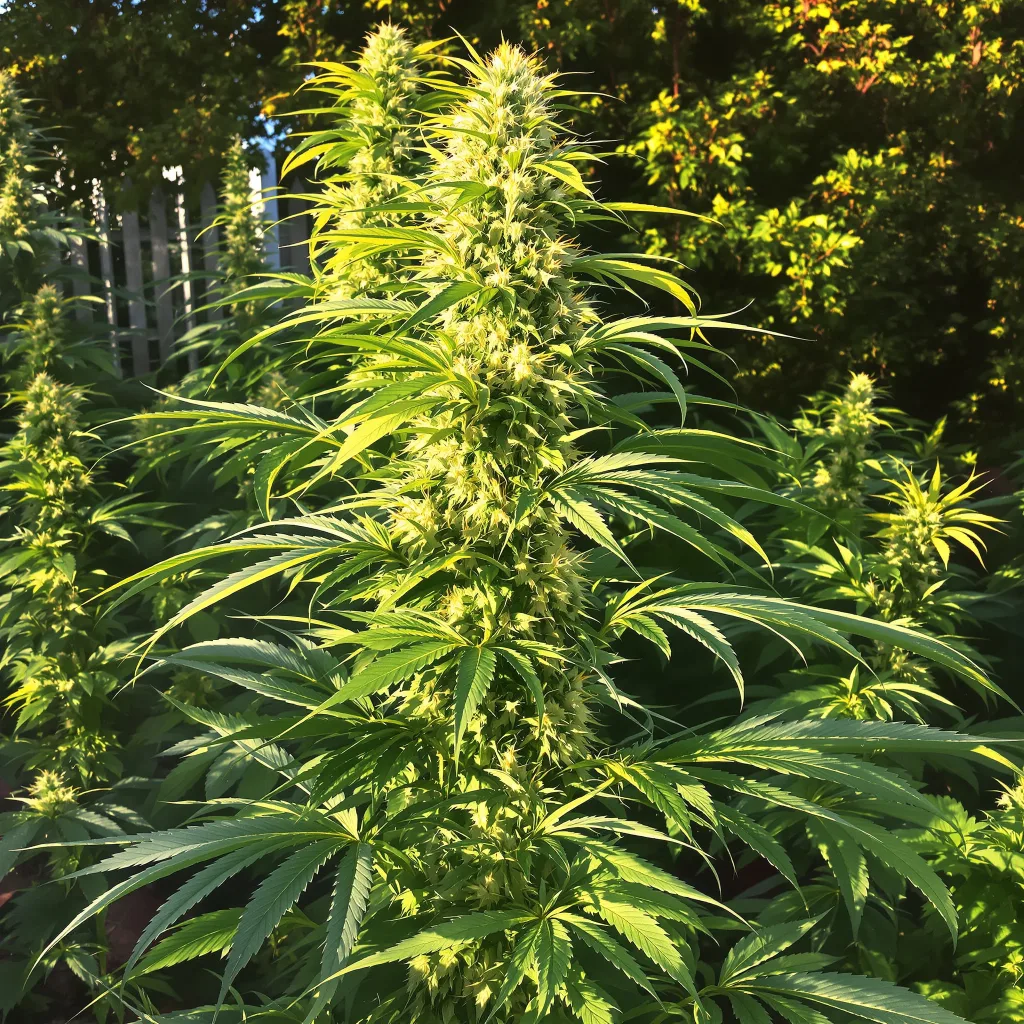
A listed flowering time is measured from the flip — the point at which the plant commits to flowering — under stable indoor conditions. Outdoors, that number stretches. Cooler nights slow metabolism, cloudy weeks slow it further, and a large plant in the ground takes longer to ripen than a modest one in a pot. Treat the published figure as the floor and add a week or two for a South Island site.
You also cannot control when the flip happens outdoors. Photoperiod plants respond to night length, so flowering initiates earlier at higher latitudes where nights draw out sooner after the solstice — a small mercy for southern growers, though rarely enough to offset the earlier frost. The practical consequence is that you are working with two variables you do not set: when flowering begins and when frost arrives. The variety's flowering time is the one number you do get to choose.
Flowering times vary widely even within a single category, which is worth seeing before you assume a broad label like "indica" or "sativa" tells you anything reliable about speed.
1254 of 1254 varieties in this category publish a flowering time. Counted from the catalogue when this page was built.
For any cultivar you are seriously considering, the figures that matter — germination rate, cannabinoid profile, terpene panel — are published on that cultivar's genetics report rather than in general articles like this one. Check the Permafrost Feminised genetics report before committing to it for a cold site, and do the same for anything else on your shortlist.
Where autoflowers solve the frost problem outright
If your frost date makes the arithmetic uncomfortable, autoflowering genetics remove the photoperiod variable entirely. They flower on age rather than night length, which means you set the harvest date when you germinate rather than waiting to see what the season does.
For a Southland or Central Otago grower, this changes the game. Germinate in early November, and the plant runs its full cycle through the warmest, driest part of summer and comes down in February — well clear of both frost and the worst of the autumn damp. A second sowing in December can be harvested in March if the season looks kind. You trade some size for that certainty, because an autoflower cannot be vegged into a large plant, but a finished modest plant beats an ambitious frozen one.
Some practical notes for autoflowers outdoors here:
- Sow into the final container. They do not have the time to recover from transplant shock the way a photoperiod plant does.
- Do not top or train aggressively. Low-stress tying-down is fine; anything that costs a week of recovery costs you a week of flower.
- Stagger your sowings. Two or three weeks apart spreads your exposure to a bad fortnight of weather.
- Feed lightly early. The vegetative phase is short and it is easy to overshoot a small root mass.
The autoflowering seed collection is where to look if your site is genuinely frost-limited, and the auto-flowering indica varieties tend towards the compact, wind-tolerant end, which suits exposed Canterbury and Wellington sites.
Three approaches to a short season, side by side
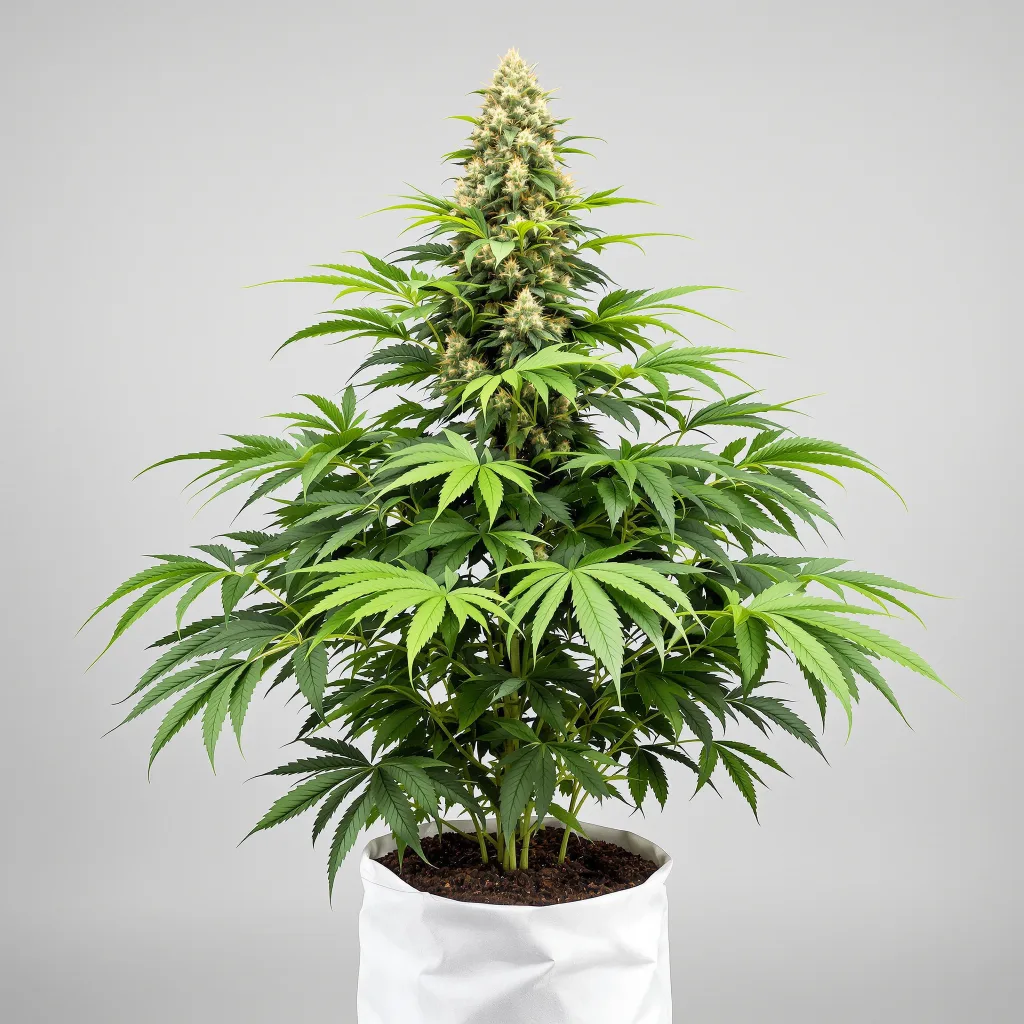
Frost-hardiness is not a real trait in the way it is for fruit trees — cannabis does not survive a hard frost regardless of genetics. What varies is how quickly a plant gets to the finish line and how well its flowers shed water on the way. Those are the two things to compare.
These cultivars sit at different points on that trade-off, which makes them a useful way to see how the choice plays out.
If you are deciding between two of them for a specific site, put the numbers next to each other rather than reading the listings separately — flowering time, height and yield in one view tells you more about outdoor suitability than any description does.
| Permafrost Feminised | Blue Frost Feminised | |
|---|---|---|
| Type | Photoperiod | Photoperiod |
| Lean | Sativa | Indica |
| Listed THC | 20% | 20% |
| Flowering | 70-80 days | 60-70 days |
| Height | Short | Short |
| Indoor yield | 400 gr/m² | up to 200 g/m2 |
| Outdoor yield | up to 400 g/plant | up to 200 g/plant |
| Difficulty | Easy | Easy |
| Price from | $28.79 | $23.39 |
Read those figures against your own arithmetic. A variety that finishes two weeks earlier and yields slightly less is the better plant on a Southland section and the worse one in Hawke's Bay. There is no universally correct answer, which is exactly why the frost date has to come first. You can also work the other direction with the outdoor and indoor yield estimator to see whether a faster, smaller plant still gets you where you want to be, and put shortlisted cultivars head to head using the strain comparison tool.
A practical timetable for the season ahead
Adjust these dates by a fortnight either way depending on where you are. Northland runs earlier; Southland runs later and shorter.
- August to September. Choose the variety by frost arithmetic. Order early — seed in hand before spring beats scrambling in November. Prepare soil, dig in compost, sort drainage.
- Late September to October. Germinate indoors or under cover. Keep seedlings warm and protected; a late frost will take them.
- Mid to late October. Harden off over a week, then plant out once night temperatures are reliably above about 10°C. Stake at planting, not later.
- November to December. The main vegetative push. Train, top if you intend to, and get the structure you want before the solstice. Watch for wind damage and tie in.
- Late December to January. Flowering initiates. Stop topping. Switch feeding towards flower, remove interior growth, and make sure the canopy is open.
- February. Peak bulking. Support heavy branches before they need it. Begin serious rot inspection after any wet spell.
- March. Ripening and the highest botrytis risk. Inspect after every rain. Be prepared to take a plant a few days early rather than lose it.
- April. Harvest anything remaining, and inland, harvest ahead of the frost forecast rather than on it.
Drying in a damp autumn deserves its own attention. Do not hang buds in an unheated shed in Greymouth in April and hope. You want moving air, moderate temperature and a dehumidifier or a heated room, otherwise everything you protected on the plant will spoil on the line.
Common ways the arithmetic goes wrong
The most frequent error is planting out too early. A warm week in September feels like spring, seedlings go out, and a clear cold night finishes them. Cold, clear and still is the dangerous combination — cloud and wind both hold frost off.
The second is using the short end of a flowering range. If a variety is listed at eight to ten weeks, plan for ten. You will be pleasantly surprised occasionally and correct most of the time.
The third is choosing on yield. The highest-yielding varieties in the catalogue are genuinely productive plants, but a heavy yielder is often heavy because it is dense, and dense is precisely what fails in a wet March. Indoors that trade-off does not exist. Outdoors in New Zealand it is the whole decision.
The fourth is ignoring the microclimate. A north-facing slope with a wall behind it can be a fortnight ahead of flat ground fifty metres away, and a low-lying hollow can be a fortnight behind. Walk your section on a cold morning and see where the frost sits longest.
Questions New Zealand growers actually ask
When can I put seedlings outside without losing them to frost?
Generally after your local last-frost date, which is roughly late September in coastal Northland, mid to late October in Auckland and the Bay of Plenty, and late October into November inland in Canterbury, Otago and Southland. Wait until night temperatures are consistently above about 10°C and harden plants off over a week before they go out permanently. If a clear, still, cold night is forecast in the first fortnight after planting, cover them.
Will a plant survive a light frost if it is nearly finished?
A brief, light frost on a mature plant will damage fan leaves and may not destroy the flowers, but it stresses the plant badly and a second frost usually finishes it. Do not plan around surviving one. If frost is forecast and the plant is close, cover it with frost cloth overnight and harvest within a few days rather than pushing for another week of ripening.
Can I grow outdoors on the West Coast with that much rain?
Yes, but the variety choice narrows considerably. You want a fast finish and open flower structure, plants under cover of some kind if you can manage it, and a willingness to harvest early. Container growing with the ability to move plants under shelter during prolonged wet spells makes a real difference there.
Do autoflowers really finish in time in Southland?
They are the most reliable option for a short season, because you control the start date and the cycle runs on age rather than day length. Germinate in early November and you are typically harvesting in February, comfortably before frost. Size is the compromise — expect a smaller plant than a photoperiod grown through the whole summer.
How do I know the flowering time listed is accurate for outdoors?
Published flowering times are indoor measurements from the flip, so treat them as a minimum and add a week or two outdoors, more in the south. Cool nights and overcast weeks both slow ripening. Every cultivar's tested figures are on its own genetics report — the Blue Frost Feminised genetics report is an example of the detail available — and the growing and ordering FAQ covers the practical side of getting seed in hand before spring.
Ready to Start Growing?
All 1,677 varieties, posted unbranded and tracked to both islands, each with whatever grow figures we could trace.
Shop Cannabis Seeds