Thrips Damage in a New Zealand Grow: Reading the Leaf and Stopping the Spread
Royal King Seeds
Cultivation team
Thrips damage shows up as dull silver or bronze patches on the upper surface of a leaf, often with a scatter of tiny black varnish-like specks, while the insects themselves sit on the underside. If you turn the leaf over and see slender pale or dark slivers a millimetre or two long that scuttle sideways when disturbed, you have your answer, and the silvering is scar tissue that will never green up again.
That last point is the one that saves people money. Growers routinely treat, see the same silver patches a fortnight later, and assume the treatment failed. What matters is whether new damage is appearing on new growth. Everything below is about telling those two apart, and about what actually reduces the damage in New Zealand conditions rather than what reads well on an overseas forum.
What thrips damage actually looks like on a cannabis leaf
Thrips do not chew and they do not pierce a single point. They rasp the leaf surface open and drink what leaks out, so the scar is a patch rather than a dot. Emptied cells fill with air, which is why the damage reads as silver, pewter or a dry tinfoil sheen rather than yellow. Hold the leaf at an angle to a window and the damaged area looks slightly sunken and papery compared to the tissue around it.
The other tell is frass. Thrips leave dark, almost glossy specks the size of a pinhead, usually clustered near the feeding scars on the underside. On badly hit leaves the silver goes bronze, then brown and brittle at the edges.
- Where it starts: most often on mid and lower fan leaves, close to the midrib and the base of a leaflet, where the leaf is flattest and easiest to work.
- What the shape tells you: irregular streaks and blotches that ignore the vein pattern entirely. Deficiencies respect veins; thrips do not.
- New growth: feeding in the growing tip produces crinkled, cupped, silver-flecked young leaves that never open properly. This is the sign that the population is established, not just visiting.
- Adults: 1–2 mm, cigar-shaped, pale straw through to near black depending on the species and stage, with fringed wings you will only see under a loupe. Larvae are wingless, cream to yellow, and stay on the plant.
A 30x jeweller's loupe or a phone macro lens settles it in seconds. Guessing from across the tent does not.
Telling thrips damage apart from mites, magnesium and light stress
Three things get misdiagnosed as thrips, and thrips get misdiagnosed as all three.
Spider mites
Mite feeding is pinprick stippling — hundreds of discrete pale dots, evenly spread, giving a sanded or dusty look rather than a metallic sheen. Mites concentrate at the tops of plants and in growing tips, and once the population is up you will find fine webbing strung between leaflets. Thrips leave no webbing and their scars run together into patches. Under the loupe, mites are round and eight-legged; thrips are elongated and move fast.
Nutrient problems
Magnesium shortfall yellows between the veins in a tidy, symmetrical pattern, usually on older leaves, and the leaf stays soft rather than turning papery. Zinc and iron issues hit new growth but produce clean interveinal pallor, not silver blotching with black specks. If the pattern looks drawn with a ruler, it is chemistry, not insects — and worth checking your mix against a feed schedule calculator for your tank size before you reach for a spray.
Light and heat
LED bleaching sits on the leaves nearest the fixture, follows the footprint of the light, and shows as pale or white-tipped tissue on the top canopy with no damage lower down. Thrips damage does the opposite: worst in the shaded middle and lower canopy, better up top where it is bright and airy.
Where your thrips came from decides what you do next
Several thrips species turn up on cannabis here, and they do not behave the same way. Western flower thrips is the one commercial growers worry about, because it breeds fast in warmth and has a long record of shrugging off repeat applications of the same active ingredient. Onion thrips moves off alliums, brassicas and weedy ground. New Zealand flower thrips is a native, familiar to anyone who has grown stonefruit or berries, and it swarms in late summer as flowering finishes on other plants and the population goes looking for somewhere else to be.
Greenhouse thrips is the other common one and it is the most regionally New Zealand of the group. It loves shaded, sheltered evergreen foliage — the sort of thing planted as a boundary hedge in Auckland, Tauranga and Wellington suburbs. Pittosporum, laurel, camellia and viburnum all host it, and a plant tucked against that hedge for privacy is downwind of a permanent nursery. If your damage is worst on the hedge side of the plant, that is not a coincidence.
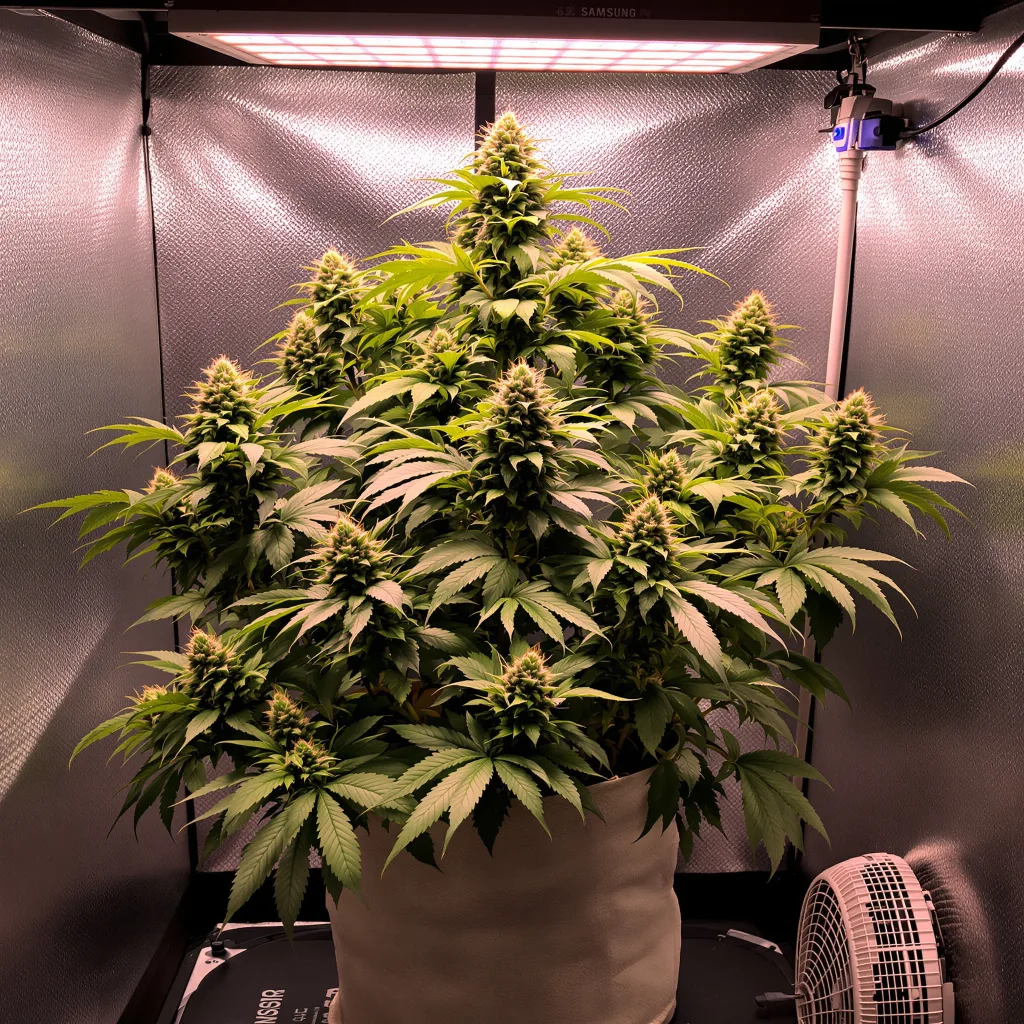
Indoors, the usual entry points are a clone or nursery plant brought in from outside, potting mix stored open in a shed, or you. Thrips ride on clothing. A tent that runs clean for two cycles and then explodes almost always got reinfected rather than never cleared.
When thrips damage shows up in the New Zealand season
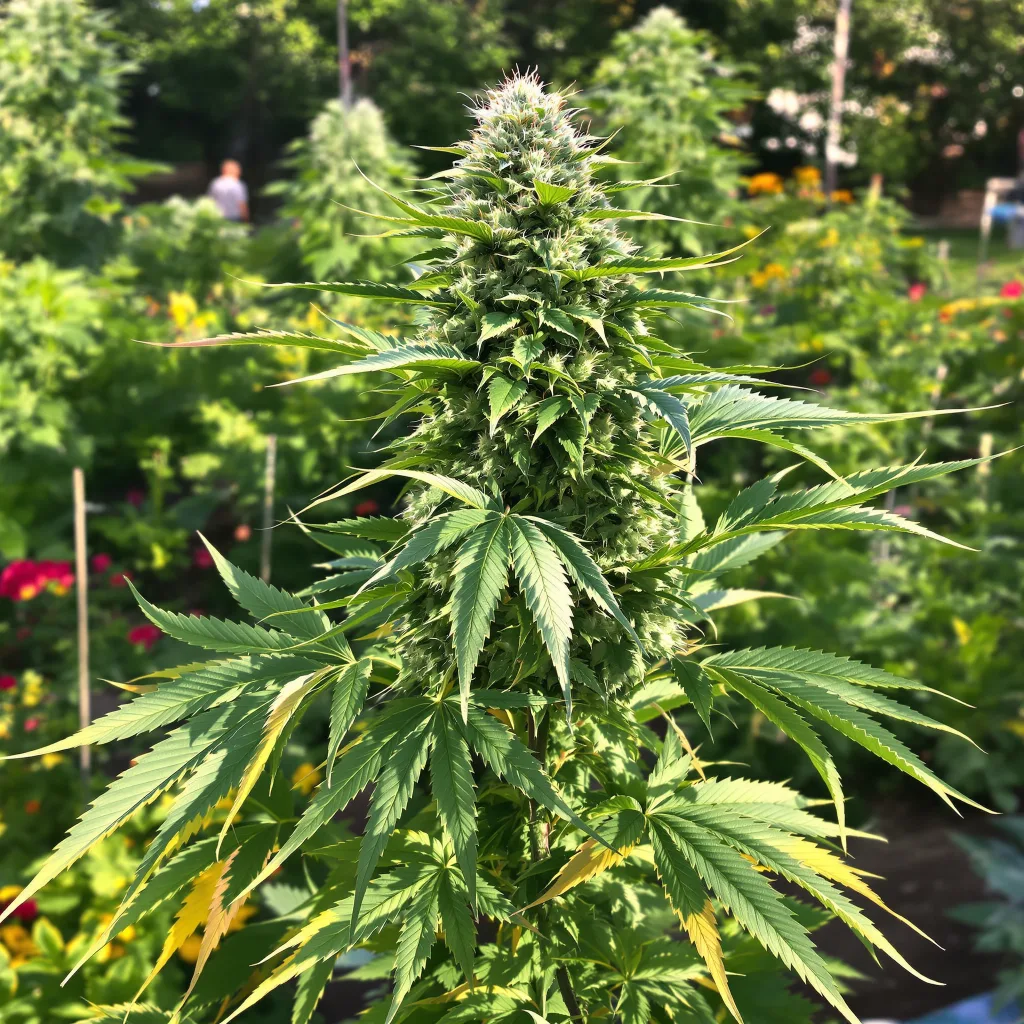
Outdoors, the first pressure comes in late spring as things warm up and seedlings go out after the last frost, but the real spike is from January into March. Development speed is temperature driven, so generations stack up through the warmest months and a population that looked trivial at New Year can be doing visible damage by the time the plant is well into flower. Late summer is also when surrounding pasture dries off, crops are harvested and cover crops are cut — every one of those events pushes thrips off their host and into whatever is still green and lush nearby.
Drier, sunnier districts feel this hardest. Gisborne, Hawke's Bay, Nelson and Marlborough hold warmth well into autumn, which keeps thrips breeding later into the season than a grower in Southland will ever see. The trade-off is real: those same regions get a much easier run with grey mould, while a Northland or Bay of Plenty grower has a shorter thrips window but a nastier damp-autumn one. Knowing where your season actually sits makes the timing of any intervention obvious.
Timings shift with latitude — the north runs earlier and longer than inland Otago and Southland.
Indoors, the season barely matters, but the room's habits do. A tent that runs warm and dry with poor airflow at canopy height is a thrips incubator any month of the year.
Damage on buds is a different problem from damage on fan leaves
Losing surface area on fan leaves costs you growth. Losing bud sites costs you the crop. Once flowers form, thrips move in among the bracts where nothing sprayed from outside will reach them, feeding on the sugar leaf and leaving those leaves silvered, dried and stuck to the flower. Frass accumulates in the same places. Dead tissue sitting inside a wet bud in a damp New Zealand autumn is exactly the entry point botrytis looks for, so on the coast a mid-flower thrips problem quietly becomes a grey mould problem.
This changes the rules on treatment. Wetting buds past the first two or three weeks of flower is a bad trade almost anywhere in the country, and worse on the West Coast or in Northland. Oils and soaps also leave residue on resin that you will taste later. From mid-flower onward, the honest options are biological controls, blue sticky traps to pull down adult numbers, removing the worst-affected sugar leaf, and finishing the plant as fast as you reasonably can.
Which is an argument for genetics, not chemistry. A variety that comes down in March rather than late April spends fewer weeks in the window where both thrips and mould are at their worst — and finishing time varies enormously across the catalogue, so it is worth seeing how it spreads before you commit to a plant.
1254 of 1254 varieties in this category publish a flowering time. Counted from the catalogue when this page was built.
What actually reduces the damage, in the order it is worth doing
Thrips are hard to eliminate and easy to suppress. Aim for suppression and you will get a clean crop; aim for eradication with a single spray and you will get resistance.
Start with the things that do not involve spraying
- Blue sticky traps at canopy height. Thrips respond to blue more strongly than to yellow. Traps will not control a population on their own, but they are how you monitor, and the trap count is your only objective measure of whether anything is working.
- Strip the worst leaves. Heavily scarred fan leaves are carrying eggs, larvae and no useful photosynthesis. Bag them, do not drop them on the floor or into the pot.
- Cut the bridge. Clear weeds, long grass and finished vegetables within a few metres of an outdoor plant. Pull the plant back from a hedge line if that is where the pressure is coming from.
- Quarantine anything new. Two weeks apart from your main grow, checked with a loupe, before it joins the tent.
- Change your shirt. If you have been gardening, weeding or mowing, do not walk straight into the tent.
Then the sprays, rotated
Insecticidal soap and horticultural oil work on contact and only on contact, which means underside coverage or nothing. Neem-based products with azadirachtin act more slowly, disrupting moulting and feeding, so judge them over ten days rather than overnight.
Spinosad has translaminar movement into the leaf, which is why it does better against a pest that hides — but it is also the product western flower thrips has most reliably developed resistance to overseas, so alternate modes of action rather than hammering one. Spray at lights-off or in the evening outdoors, never onto hot leaves in full sun, and always follow the directions on whatever product you buy.
Two applications will not do it. Eggs are inserted into leaf tissue where sprays cannot reach, so you are treating the stages that hatch afterwards. Plan on repeating at intervals of roughly five to seven days for at least three rounds, adjusting for how warm the room or the weather is.
The soil stage is where most thrips programmes quietly fail
Most thrips species drop off the plant to pupate in the top few centimetres of the growing medium or in leaf litter. Spray the canopy perfectly and that cohort is untouched, so adults keep reappearing and you conclude the spray does nothing. It did — it just only covered half the life cycle.
- Predatory soil mites (Stratiolaelaps and relatives) hunt pupae in the medium and are sold by biological control suppliers here, usually in a carrier you sprinkle over the pot surface.
- Beneficial nematodes watered into the medium target the same soil-dwelling stage.
- Predatory mites for the foliage — Amblyseius cucumeris and swirskii — take first-stage larvae on the leaf. They need to go out before the population is large, not after, and they are incompatible with most sprays, so pick one strategy and commit.
- A physical barrier — a layer of coarse sand, fine grit or horticultural fleece over the medium — makes the round trip harder in both directions. It also helps with fungus gnats.
Attacking the canopy and the medium at the same time is the difference between a fortnight of frustration and a population that visibly collapses.
Damaged leaves stay damaged — how to tell if the plant has turned the corner
Silvered tissue is dead. It cannot repair, will not re-pigment, and stays on the plant looking exactly as alarming as it did on day one. So stop grading your progress by how bad the old leaves look.
Instead, mark a young, undamaged leaf with a loose tie and check it weekly. If it is still clean a fortnight later, and your sticky trap counts are falling, and new growth is coming out flat and unsilvered, the problem is under control regardless of what the lower canopy looks like. If fresh silver appears on that marked leaf, the treatment interval is too long or the soil stage is untouched.
Yield impact depends on how much leaf area was lost and when. Light damage in early veg costs almost nothing, because the plant replaces the canopy. Heavy damage from stretch onward costs real weight, and the only honest thing to do is revise your expectation — running your canopy area through a yield estimate tool with a reduced plant count or size is a more useful exercise than hoping.
Setting up so the next crop wears the damage better
No cannabis variety is thrips-proof. What varieties differ in is how fast they grow through damage and how long they leave themselves exposed. A vigorous plant that replaces chewed-up foliage quickly, and finishes in March instead of dragging into late autumn, simply spends less of its life in trouble. That is also the plant that dodges the damp-autumn mould risk, so the two problems have the same solution.
The fast, hardy outdoor types are the obvious starting point, and they are worth looking at side by side with their finishing windows in front of you.
Early Skunk Feminised earns its place here on sheer resilience in wet and windy conditions — a useful trait for anyone growing in Wellington, Taranaki or on the Coast, and its full breakdown sits on the Early Skunk genetics report. If your constraint is frost rather than rain, the trade-off between these two is worth reading properly.
| Early Skunk Feminised | Early Girl Feminised | |
|---|---|---|
| Type | Photoperiod | Photoperiod |
| Lean | Indica | Indica |
| Listed THC | 21% | 20% |
| Flowering | 55-65 days | 7-8 weeks |
| Height | over 2 m | Medium |
| Indoor yield | Up to 500g/m² | 397-510 g/m2 |
| Outdoor yield | Up to 600 gr | 567 g/plant |
| Difficulty | Easy | Easy |
| Price from | $26.09 | $28.79 |
Indoors, the pressure points are different. Airflow through the canopy, defoliation discipline and quarantine of incoming material matter more than genetics. But a shorter flowering time still shortens your exposure, and the indoor-suited varieties tend to be the ones that fit a controlled canopy without throwing shaded, humid dead zones in the middle of the plant. Autoflowering plants shorten the exposure window further, though they also have less capacity to recover from serious leaf loss because they cannot simply veg for longer — worth weighing if you are looking at the autoflowering range.
If you are not sure what suits your district and your finish date, the strain finder filtered by region and season length narrows it faster than scrolling, and the outdoor-hardy selections are a reasonable default for a first season south of about Hamilton.
Questions New Zealand growers ask about thrips damage
Will the silver marks go away once I get rid of the thrips?
No. Those cells are dead and the tissue stays silver until the leaf drops. Judge success on whether new leaves are emerging clean and whether your sticky trap counts are falling, not on the appearance of leaves that were damaged weeks ago.
Can I still smoke buds that had thrips in them?
The bigger issue is usually what came with them. Dried frass and dead sugar leaf embedded in a flower are unpleasant, and dead tissue inside a bud in a damp autumn is a common starting point for grey mould, which is genuinely not worth taking chances with. Trim hard, inspect the inside of every bud rather than just the outside, and discard anything with grey or brown collapsed tissue at the core.
Is it too late to spray if my plant is already flowering?
Past the first two or three weeks of flower, wetting buds in New Zealand's autumn creates a worse risk than the thrips do, particularly in Northland, Auckland and on the West Coast. Switch to blue sticky traps, predatory mites, removing the worst-affected leaves, and getting the plant to harvest without further stress.
Why do they keep coming back after I spray?
Almost always because the pupal stage in the growing medium was never touched, or because eggs already inside the leaf hatched after the spray dried. Treat the medium as well as the canopy, repeat every five to seven days for at least three rounds, and rotate products rather than using the same active every time.
Do thrips spread anything to the plant?
Thrips are well documented as carriers of tospoviruses in other crops, which is one reason a plant sitting next to a struggling tomato patch is in a worse spot than one that is not. Keep some distance between your grow and vegetable beds, and clear finished crops rather than letting them sit.
If you want a broader run of seasonal problem-solving, the growing guides index covers the rest of the New Zealand calendar, and questions about ordering are answered on the frequently asked questions page.
Related Articles
Bud Rot: Why a Damp New Zealand Autumn Is When It Takes Hold, and the Plant Traits That Resist It
pests-and-problemsWhitefly Treatment in a New Zealand Grow: Identifying It Early and What Actually Works
pests-and-problemsThrips NZ: Identifying Them Early and What Actually Works
pests-and-problemsFungus Gnats NZ: Identifying Them Early and What Actually Works
Ready to Start Growing?
All 1,677 varieties, posted unbranded and tracked to both islands, each with whatever grow figures we could trace.
Shop Cannabis Seeds